
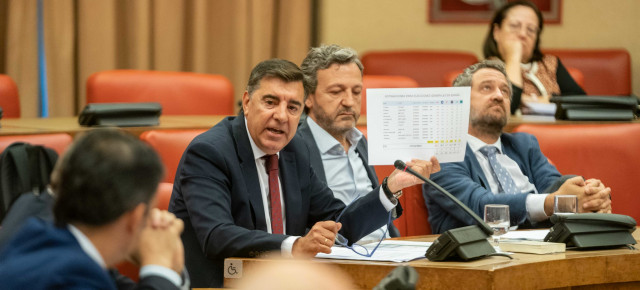
Proposal Aims to reform Spanish Center for Sociological Research (CIS)
A proposal for a “Health and Democratic Regeneration” law seeks to overhaul the Spanish Center for Sociological Research (CIS), addressing concerns about its neutrality and independence. The initiative, spearheaded by a GPP deputy, aims to introduce stricter eligibility criteria for the CIS presidency and enhance oversight of its operations.
Key Provisions of the Proposed Law
- Eligibility for CIS presidency: The proposal stipulates that any candidate for the CIS presidency must not have held a political or organic position in any political party within the last five years.This condition mirrors a similar requirement in the agreement for choosing members of the General Council of the Judiciary (CGPJ).
- independent Advisory Council: The law proposes the establishment of an independent CIS advisory council. This council would consist of 11 professors with no prior political affiliations. Their mandate would include supervising both the wording of survey questions and the composition of opposition courts and scholarships.
-
Restrictions on Pre-Election Surveys: To prevent the CIS from influencing electoral campaigns with perhaps biased surveys, the proposal seeks to prohibit the center from conducting any surveys during the final days of a campaign. This measure aims at
eliminating any glimpse of doubt that trackings can be doing in favor of the government.
Did you know? The CIS, established in 1963, is Spain’s primary public institution dedicated to sociological research. Its surveys and studies are widely used to understand public opinion and social trends.
Open to Collaboration
The GPP deputy emphasized that the proposition is an initiative open to the groups so that everyone can make contributions, provided they seek the objective we pursue: greater neutrality and independence of the CIS and also correct the current drift of that organism.
This statement underscores a willingness to collaborate with other political groups to achieve the desired reforms.
Accusations of Bias and Manipulation
The proposal comes amid accusations that the current director of the CIS, José Félix Tezanos, has led the institution into an unprecedented reputational crisis.
Critics allege that the CIS is now primarily known for the last name of the one who directs it, the tendency of his questionnaires and partiality in his electoral surveys.
Concerns have been raised about the accuracy and impartiality of the CIS’s electoral estimates.According to the GPP deputy, The Tezanan CIS is characterized, above all, by its scandalous deviations in electoral estimates, since their surveys always have the same bias and the same injured.
The deputy further stated, and when that bias is not systematically corrected, it is indeed called manipulation.
The deputy added that for that, his surveys are no longer believed by anyone, not even Sánchez, because they know they are pure science fiction.
Pro Tip: Analyzing survey methodologies and past data can definitely help assess the reliability and potential biases of polling organizations. Look for clarity in data collection and analysis methods.
Allegations of Political Influence
The GPP deputy argues that the perceived bias in the CIS’s surveys is not accidental but rather the result of a deliberate strategy to exert political influence. This situation is neither innocent nor casual, but brings the cause of a preconceived strategy of the assault and colonization of the institutions and then put them at the service of the Government Party,
the deputy stated. This has allegedly transformed the CIS into an instrument in the hands of the PSOE Committee and a propaganda machine of Sanchismo.
