
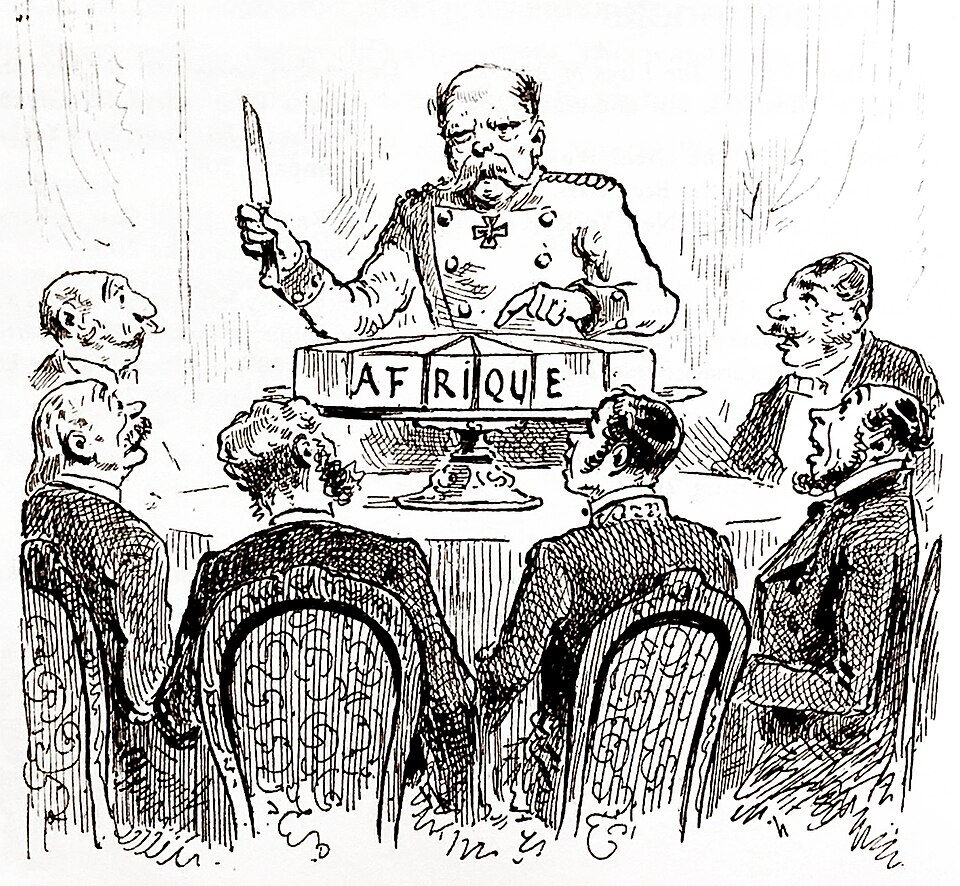
The Scramble for a Continent: How the Berlin Conference Shaped Modern Africa
In November 1884, a pivotal, and profoundly unequal, gathering commenced in Otto von Bismarck’s palace on Wilhelmstraße, Berlin.The Berlin Conference, as it became known, wasn’t convened to discuss the future of Africa with Africa, but rather to manage the escalating competition amongst European powers for control of its vast resources. Nineteen nations, representing the burgeoning industrial strength of the Global North – from the United States and Great Britain to Russia and Portugal – sent delegates. Notably absent were any representatives from the continent they intended to dissect.
The conference’s purpose was to formalize the “Scramble for Africa,” a period of rapid colonization driven by economic ambition and imperial rivalry. Prior to 1884, european control was limited to roughly 20% of African territory. Within three decades, by the eve of World War I, only Ethiopia and Liberia remained autonomous. The arbitrary lines drawn in Berlin fractured over ten thousand distinct African communities, forcing them into forty newly created colonial territories, disregarding existing ethnic, linguistic, and political boundaries. A contemporary observer, the Lagos Observer in Nigeria, aptly described the proceedings as “a robbery on so large a scale.”
The consequences of this “robbery” were brutal. Colonization wasn’t a peaceful process of development, but a violent imposition of foreign rule. The British pioneered the use of concentration camps in South Africa to control the Boer population,a tactic later replicated by Germany in Namibia,where a systematic genocide decimated 80% of the Herero and Nama peoples. The normalization of colonial exploitation extended beyond military force. In Germany, the legacy of empire was subtly woven into everyday life – streets were named in honor of colonizers, and even a major supermarket chain, Edeka, derived its name from an acronym signifying the “Cooperative of Colonial Grocers.”
The Berlin Conference codified the rules of this land grab through documents like the General Act. Article 34 established the “doctrine of spheres of influence,” allowing European powers to lay claim to African territories simply by notifying other participating nations.Article 35, the “principle of effective occupation,” stipulated that a coastal presence, coupled with a promise to uphold the “rights and freedoms” of trade – essentially, the privileges of other imperial powers – was sufficient to legitimize colonial acquisition.
despite the overwhelming power of the European forces, resistance was widespread. The Nandi peopel of Kenya waged a decade-long struggle against the construction of the Uganda Railway, while Ethiopia successfully defended its sovereignty until the italian invasion of 1936. The Maji Maji Rebellion in Tanzania (1903-1907) represents just one example of numerous local uprisings. However, superior European weaponry ultimately suppressed these movements.
The artificial borders and political structures established at the Berlin Conference, and enforced through violence and exploitation, continue to shape the political landscape of Africa today. The divisions sown in that palace on Wilhelmstraße are not relics of the past, but enduring realities that continue to fuel conflict and hinder development across the continent.
