
Giant ‘Quipu’ Structure Challenges Understanding of Universe
The universe’s largest structure, dubbed Quipu, presents major questions for cosmological understanding. Quipu’s mass and size affects the surrounding cosmos, so astronomers are diving deep into its properties.
What is Quipu?
With a mass of 200 quadrillion suns, Quipu is a “superstructure” stretching over 1.3 billion light-years. This enormous size necessarily influences its environment, making its study vital for understanding the universe. The name “Quipu” comes from the Incan system of knotted cords used for record-keeping.
Research Details
The study, “Unveiling the largest structures in the nearby Universe: Discovery of the Quipu superstructure,” led by Hans Bohringer of the Max Planck Institute, will appear in Astronomy and Astrophysics. The team found Quipu and four other superstructures, noting they hold a huge amount of the universe’s contents.
According to the paper, “For a precise determination of cosmological parameters, we need to understand the effects of the local large-scale structure of the Universe on the measurements.”
How Superstructures Affect the Universe
Superstructures contain groups of galaxy clusters and superclusters. Their immense mass challenges existing cosmological evolution models. For instance, these structures affect the Cosmic Microwave Background (CMB), relic radiation from the Big Bang.
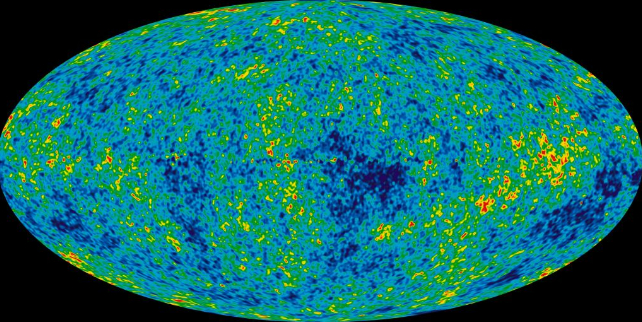
Superstructures alter the CMB through the Integrated Sachs-Wolfe (ISW) effect, creating fluctuations that interfere with our understanding of the Big Bang. Similarly, measurements of the Hubble constant are skewed by the streaming motions influenced by these superstructures. As of 2024, the Hubble constant is estimated to be around 70 km/s/Mpc, but local variations and the influence of structures like Quipu make precise measurements challenging (Space.com).
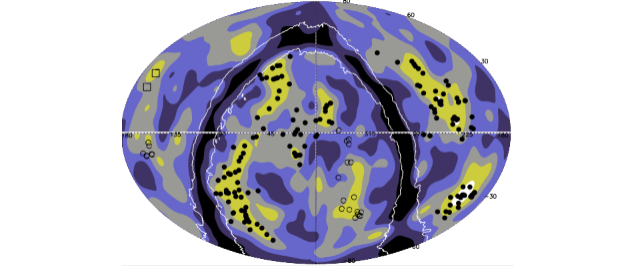
The study also indicates that large-scale gravitational lensing caused by superstructures distorts sky images, adding measurement errors. Researchers used X-ray galaxy clusters from the CLASSIX survey to identify these superstructures. X-ray emissions highlight the densest matter concentrations, acting as signposts for these massive entities.
Future Research
While simulations using the Lambda CDM model produce similar superstructures, further research is crucial to fully grasp their influence. Future studies will focus on how these environments affect galaxy populations and their evolution.
In the words of Bohringer and colleagues, “But at present, they are special physical entities with characteristic properties and special cosmic environments deserving special attention.”
