
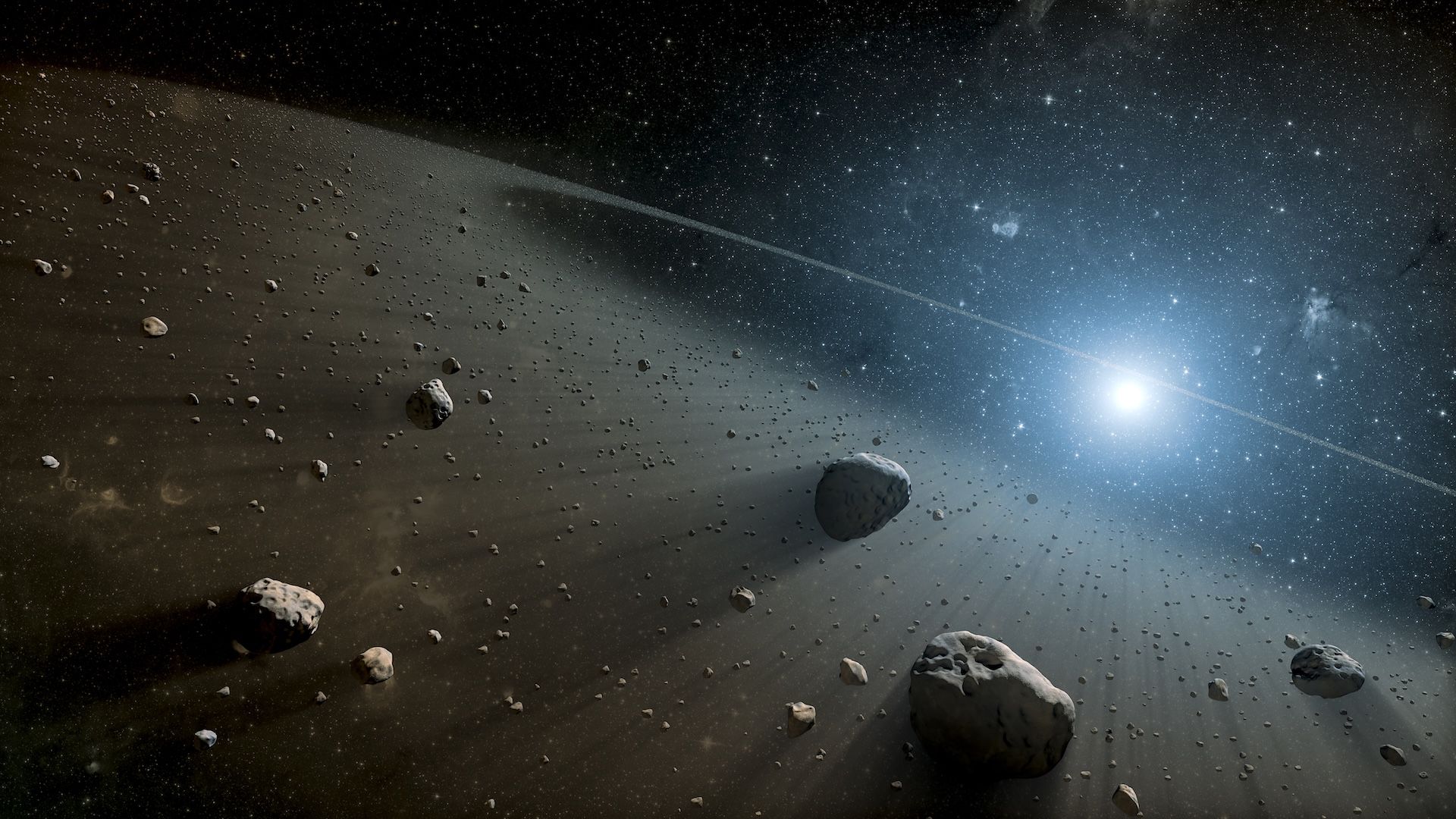
Asteroid Belt Losing Mass, Impact History of Earth Revealed
new research indicates the asteroid belt between Mars and Jupiter is gradually shrinking, a process that correlates with a decline in impacts on Earth and the Moon billions of years ago.
Scientists have discovered the asteroid belt has been losing mass for billions of years, offering new insights into the early bombardment history of our solar system and potential future risks. The research suggests the belt was approximately 50% more massive around 3.5 billion years ago, with a mass loss rate roughly double what it is today.
This loss isn’t simply material disappearing into space; some ejected bodies migrate inward, becoming potential impactors for planets like Earth. Evidence supporting this comes from geological records on Earth and the Moon, which demonstrate a decreasing frequency of large impacts over the last few billion years. Layers of glass spherules found in ancient Earth rock strata point to a period of significantly more intense asteroid bombardment in the past.
While ofen perceived as a static feature, the asteroid belt is a dynamic system undergoing continuous change. The current, slower trickle of material from the belt contrasts sharply with the more violent past revealed by these geological markers. Understanding this process is crucial for reconstructing the impact history that shaped Earth’s surface and for modeling the ongoing risk posed by near-Earth objects.
The findings were originally published on Universe Today.
