
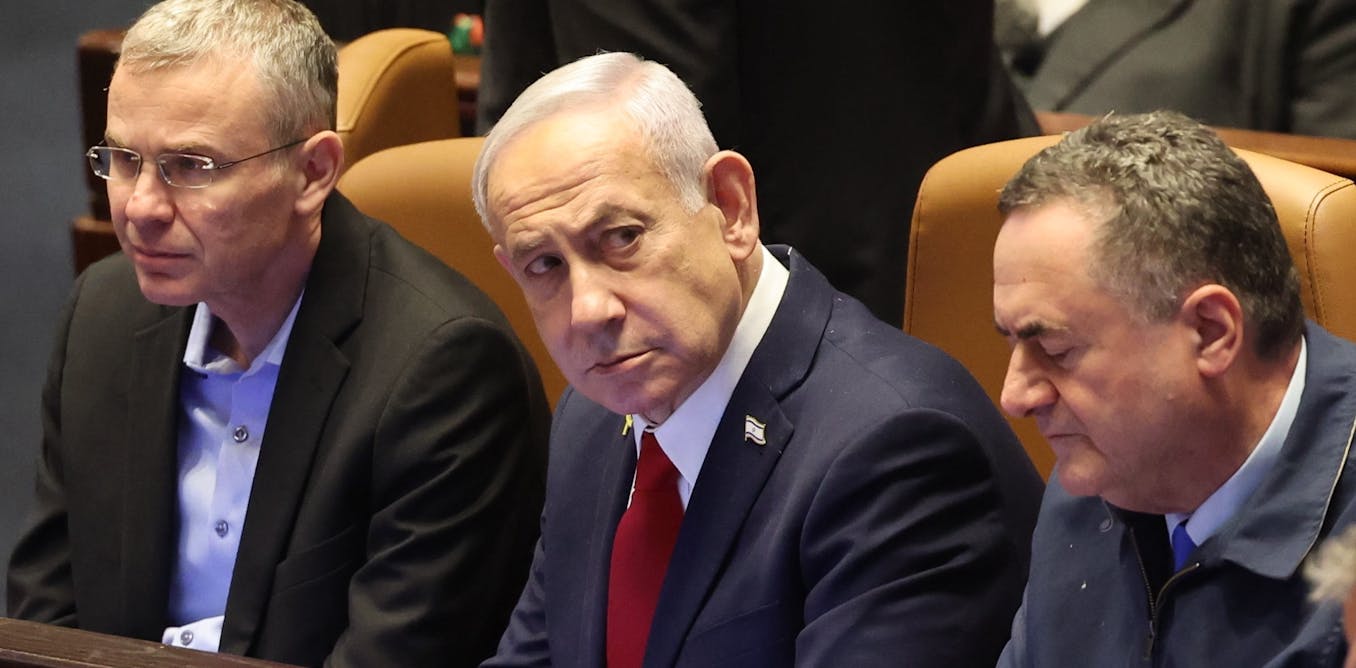
Israel’s Global Standing Erodes Amid Gaza Crisis
International Critics Mount as Key Allies Signal Shift
Israel’s global reputation has significantly deteriorated, facing widespread criticism over its military actions in Gaza, a worsening humanitarian crisis, and policies in the West Bank.
Mounting International Condemnation
Despite its self-proclaimed adherence to democratic principles and international law, Israel finds itself in a dire international predicament. Prime Minister **Benjamin Netanyahu’s** recent plans for a complete military operation in Gaza, coupled with severe starvation within the strip and restrictive measures in the West Bank, have amplified these concerns. Even with steadfast support from the United States, the Jewish state is experiencing a crisis of international credibility that could have long-lasting repercussions.
A recent Pew poll reveals that negative views of Israel now outweigh positive ones across numerous countries. In early 2025, significant majorities in the Netherlands (78%), Japan (79%), Spain (75%), Australia (74%), Turkey (93%), and Sweden (75%) expressed unfavorable opinions of Israel.
Legal Challenges and Expert Accusations
The International Criminal Court has issued arrest warrants for **Netanyahu** and former Defense Minister **Yoav Gallant**, charging them with war crimes and crimes against humanity. Additionally, numerous international law experts, genocide scholars, and human rights organizations have accused Israel of perpetrating genocide in Gaza.
Even traditional allies of Israel have voiced strong criticism of the Netanyahu government’s conduct. This includes former Prime Ministers **Ehud Olmert** and **Ehud Barak**, renowned author **David Grossman**, and prominent rabbis such as **Rabbi Jonathan Wittenberg** and **Rabbi Delphine Horvilleur**. Hundreds of retired Israeli security officials have also urged U.S. President **Donald Trump** to press **Netanyahu** to cease hostilities.
Shifting Alliances and Recognition of Palestine
Images of starving children in Gaza have prompted a significant shift in global opinion, with many of Israel’s Western allies distancing themselves from its policies. France announced its intention to recognize a Palestinian state in September, with the United Kingdom and Canada indicating similar moves. Germany has also initiated the process for recognition, and Australian Prime Minister **Anthony Albanese** suggested his country’s recognition of Palestine is inevitable.
Spain and Sweden have called for the suspension of the EU’s trade agreement with Israel, while the Netherlands has officially classified Israel as a “security threat.” These developments leave Israel with the U.S. as its sole major global ally.
US support is crucial for Israel’s sovereignty, security, and prosperity. Without billions in American arms exports, Israel would struggle to sustain its Gaza campaign or its occupation of the West Bank. pic.twitter.com/abcdefghij
— World News Updates (@WorldNewsUpdates) October 26, 2023
Despite **Trump’s** strong commitment to Israel, a significant portion of the American electorate is questioning the extent of **Netanyahu’s** influence in Washington and the value of U.S. aid. A March Gallup poll indicated that fewer than half of Americans sympathize with Israel.
This sentiment is echoed by some within **Trump’s** MAGA movement, including strategist **Steve Bannon** and Representative **Marjorie Taylor Greene**. **Trump** himself publicly questioned **Netanyahu’s** claims regarding the absence of starvation in Gaza.
Internal Israeli Views on Peace Prospects
Many Israelis reportedly wish to see the end of **Netanyahu’s** government, particularly due to its failure to secure the release of all hostages held by Hamas. Recent polling by Israel’s Channel 12 suggests that 74% of Israelis support a deal to end the war in exchange for the hostages’ freedom.
However, a majority of Israelis remain skeptical about the prospect of a future Palestinian state. One poll indicated that 82% of Jewish Israeli respondents favored the expulsion of Palestinians from Gaza. Furthermore, a Pew poll from early 2025 found that only 16% of Jewish Israelis believe peaceful coexistence with a Palestinian state is feasible, the lowest figure since polling began in 2013.
This suggests a significant shift towards extreme political positions within both the Israeli state and its electorate regarding Palestinian self-determination.
While **Netanyahu** has allowed increased humanitarian aid into Gaza under international pressure, his stated intention for a full military takeover signals an unwillingness to alter his war strategy as long as U.S. backing remains robust. His government’s objectives may include eliminating Hamas, depopulating Gaza, and potentially annexing the territory and the West Bank, effectively ending any possibility of a two-state solution.
To prevent this outcome, Washington must align with the global community. Failure to do so risks exacerbating the divide between the U.S. and its traditional allies in an increasingly polarized world.
