
Albania vs. Serbia: High Stakes,high Security as World Cup Qualifier Looms
Tirana, Albania – A potentially explosive world Cup qualifier between Albania and Serbia is set to take place Saturday, prompting unprecedented security measures to prevent a repeat of the chaos that marred their previous encounter 11 years ago.
Key points at a Glance
- October 2014: A drone carrying a “Greater albania” flag triggered a game cancellation and violent clashes during a European Championship qualifier between Serbia and Albania.
- Saturday’s Match: The two teams face off again in tirana under heavy police protection.
- Security Measures: Advanced anti-drone technology and stringent security protocols are in place to avert a recurrence of past incidents.
- Restricted Access: Streets surrounding the stadium will be blocked, and specialized anti-terrorist units will be deployed.
Did You Know?
The term “Greater albania” refers to irredentist claims encompassing territories beyond Albania’s current borders, including Kosovo and parts of neighboring countries. This concept is highly sensitive in the Balkans due to historical conflicts and ethnic tensions.
The Infamous Belgrade Incident
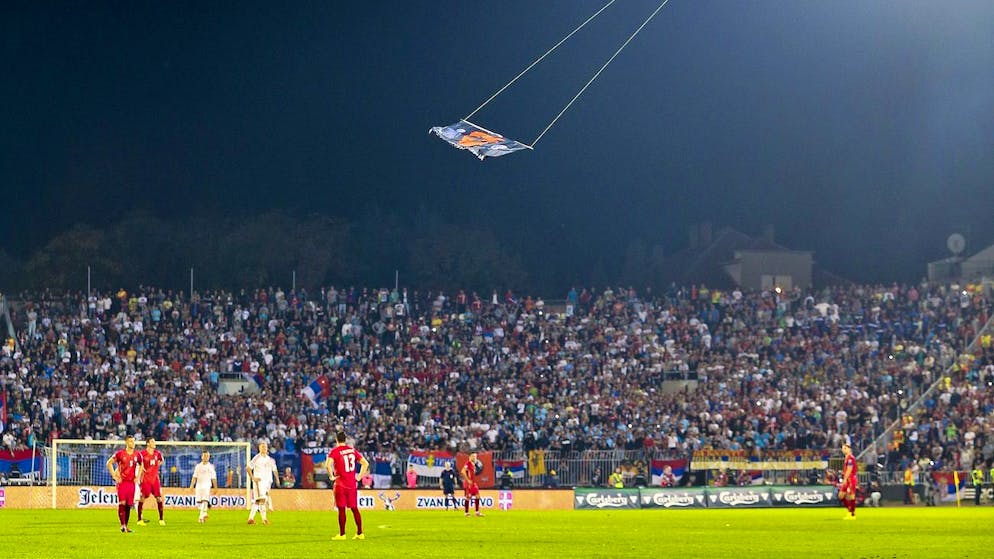
October 14, 2014, at Partizan Stadium in Belgrade, the European Championship qualifier between Serbia and Albania was abruptly halted after 41 minutes. The reason? A drone hovering above the field, displaying a black and red flag depicting the outlines of “Greater Albania,” including Kosovo.As the commentator of the Serbian TV station “PTC” promptly committed, this was seen by the serbs as A Provocation of the Albanians.
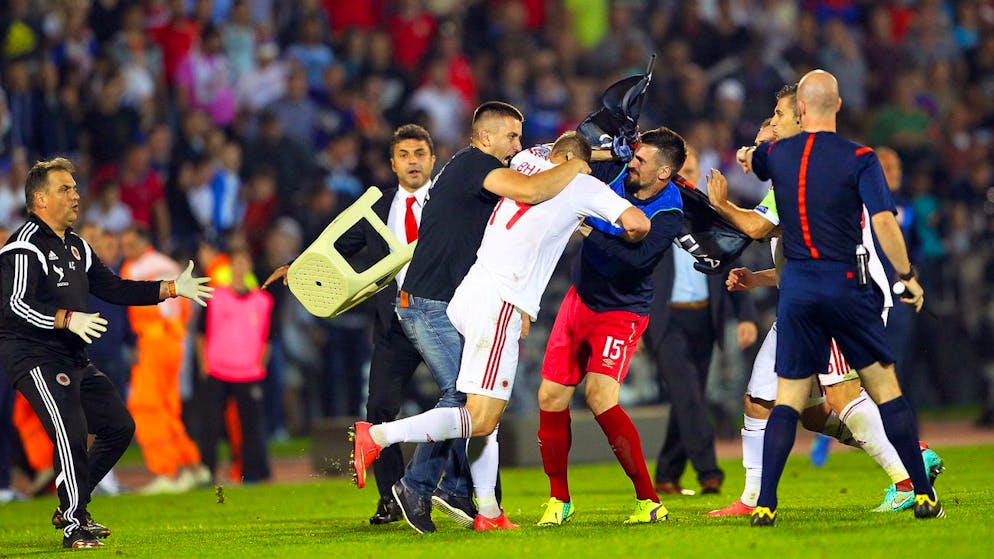
The situation rapidly deteriorated. Serbian striker Stefan Mitrovic pulled the flag down, sparking a brawl with Albanian players attempting to retrieve it. A Serbian supervisor stormed the field, attacking an Albanian player with a chair, and soon, fans flooded the pitch, targeting the Albanian team. The players fled to the locker rooms, refusing to return, and the match was abandoned. UEFA later awarded Albania a victory.
The return leg in Albania,played under heightened security,saw Serbia win 2-0. Despite this, Albania ultimately qualified for the European Championship.
Tirana Prepares for High-Security Showdown
Eleven years later, the stakes are high as Albania and Serbia meet again in Tirana for the 2026 World Cup qualification. Authorities are leaving nothing to chance, implementing extensive security measures in and around the stadium.
The Albanian Football Association, in collaboration with state security, police, and other agencies, is deploying advanced technology, including facial recognition cameras and mobile surveillance units, to monitor all activity in real-time. The area surrounding the stadium has been declared a restricted zone, with all access roads blocked. Anti-drone systems are in place to prevent any aerial provocations,mirroring the 2014 incident. The security presence is akin to that of a state visit, with a heavy deployment of police and anti-terrorist units.
Pro Tip
Facial recognition technology, while enhancing security, also raises privacy concerns. The use of such technology is often subject to legal regulations and public debate regarding data protection and civil liberties.
UEFA’s Stance on Pairing Nations
Despite the historical tensions, UEFA allows Serbia and Albania to compete in the same World Cup qualification group. UEFA considers political tensions during the draw but only intervenes in cases of acute conflict or when the safety of players and spectators is seriously compromised. According to UEFA, the Serbia-Albania pairing does not meet this threshold.
Amir Abrashi Remembers the Serbia Scandal Game Against Albania from 2014
Before the high-risk game of Albania against Serbia in the World Cup qualifier, GC-Captain amir Abrashi remembers the scandal duel from 2014 and reveals why he believes that this time it will be more custom.
06.06.2025
