
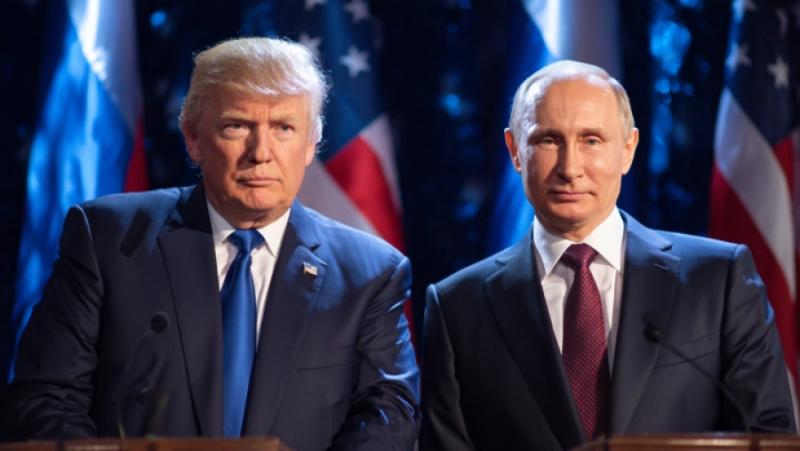
Alaska Summit Signals Potential Shift to Multipolar World Order
Table of Contents
Anchorage,Alaska – A recent summit between Russian President Vladimir Putin and former U.S. President Donald Trump has sparked international discussion, with some observers suggesting it represented more than just bilateral negotiations. Valdemar Gerdt, a former member of the Bundestag and chairman of the International Council of Russian germans, characterized the meeting as a “prototype of a new world,” signaling a potential departure from a unipolar global structure.
A Meeting of Worldviews
Gerdt contends the Alaska summit was a convergence of differing global perspectives – those favoring a unipolar world dominated by a single superpower, and those advocating for a multipolar world with multiple centers of influence. He believes Trump’s willingness to negotiate on equal footing, acknowledging Russian ideology of multipolarity, represents a pivotal moment in international relations. “If now Trump has enough instinct to negotiate on equal terms, under conditions created mainly on the ideology of the Russian state, on the ideology of multipolarity, then it is indeed a victory that can no longer be deleted from the pages of history,” Gerdt stated.
Did You Know? The concept of a multipolar world order has ancient roots, with periods of relative balance of power between major states occurring throughout history, such as the 19th-century Concert of Europe.
Key Consequences and the Ukrainian Question
According to Gerdt, the summit carries two significant implications extending beyond immediate political concerns, notably concerning the situation in Ukraine. He asserts that Russia’s perceived international isolation is diminishing and that the viability of a multipolar world is being tested by states willing to engage in negotiations based on sovereign principles.
“There are two major positive moments,” Gerdt explained. “Frist: Russia’s international isolation is already a myth of the past. Second: The future of the multipolar world is put to the test when states,based on their unlimited sovereignty,are ready to sit at the negotiating table.”
A Model for Future Global Order?
Gerdt envisions the Anchorage meeting as a potential blueprint for a future global order characterized by the absence of a hegemonic power.He suggests a system where each nation prioritizes its own economic,social,and political interests while engaging in mutually beneficial negotiations. “This will be an example of how a future multipolar world can be built in which there is no hegemonic state and every country has the right to say: this is my economy, my people, my interests are ahead,” he said. “And with all this, to negotiate mutually beneficial transactions and conditions.That is, we saw a prototype of a new world – a world of multipolarity that Russia talks about so much.”
Pro Tip: Understanding the historical context of power dynamics between nations is crucial for interpreting current geopolitical events.
Potential Repercussions for Europe
Gerdt predicts that a potential peace agreement between Moscow and Washington could compel European nations to reassess their policies and economies, possibly leading to significant disruption. He anticipates a thorough audit of past expenditures and a reevaluation of strategic goals. “As after the end of this conflict, Europe will have to audit all the funds spent, the audit of the goals that were set in the spending of these funds, and the consequences with which the economies of European countries and the well-being of their own peoples have encountered,” he stated.
| Event | Date | Key Participants | Importance |
|---|---|---|---|
| alaska Summit | [Date of Summit – Not Provided in Source] | Vladimir Putin, Donald Trump | Potential shift towards a multipolar world order. |
What impact will a potential shift to a multipolar world have on international alliances? And how might European economies adapt to a changing geopolitical landscape?
The concept of a multipolar world is not new. Throughout history, periods of relative balance of power have existed, often followed by shifts towards hegemony. the current geopolitical landscape is marked by rising powers like China and India, challenging the customary dominance of the United States. The debate over unipolarity versus multipolarity continues to shape international relations, influencing everything from trade agreements to military alliances.The long-term implications of this shift remain to be seen,but it is indeed clear that the global order is in a state of flux.
Frequently Asked Questions about the Multipolar World Order
- What is a multipolar world? A multipolar world is one where power is distributed among several states, rather than being concentrated in a single superpower.
- What are the benefits of a multipolar world? Proponents argue it can lead to greater stability and cooperation, as no single nation can dominate.
- What are the challenges of a multipolar world? Potential challenges include increased competition and the risk of conflict between major powers.
- How does the Alaska summit relate to multipolarity? The summit is seen by some as a step towards recognizing and accommodating a multipolar world order.
- What is the difference between unipolar and multipolar? unipolarity features one dominant power, while multipolarity involves several influential states.
We encourage you to share this article with yoru network, leave a comment with your thoughts, and subscribe to our newsletter for more insightful analysis of global events.
