
AI-Powered Mini-Camera Shows Promise in Predicting Future Heart Attacks
Angioplasty, a procedure to open blocked arteries frequently enough involving stent placement, is performed roughly 40,000 times annually in the Netherlands. Despite this intervention, around 15% of heart attack patients experience another cardiac event within two years. Researchers at Radboudumc,led by technical physician Jos Thannhauser and physician-researcher Rick Volleberg,are working to improve risk assessment by identifying vulnerable areas within artery walls before a second heart attack occurs.
Their study involved analyzing the coronary arteries of 438 patients using a miniature camera coupled with a newly developed artificial intelligence (AI) system. Participants were monitored for two years following the imaging.
The results demonstrate that the AI is capable of detecting weak spots in vessel walls with accuracy comparable to - and in certain specific cases exceeding – that of specialized laboratories, currently considered the international gold standard. Crucially, the AI also demonstrated a superior ability to predict the likelihood of a future heart attack or death within the two-year study period.
“If we can pinpoint high-risk weak spots and their location, we can possibly tailor medication or proactively place stents,” explains Volleberg, highlighting the potential benefit to patients.
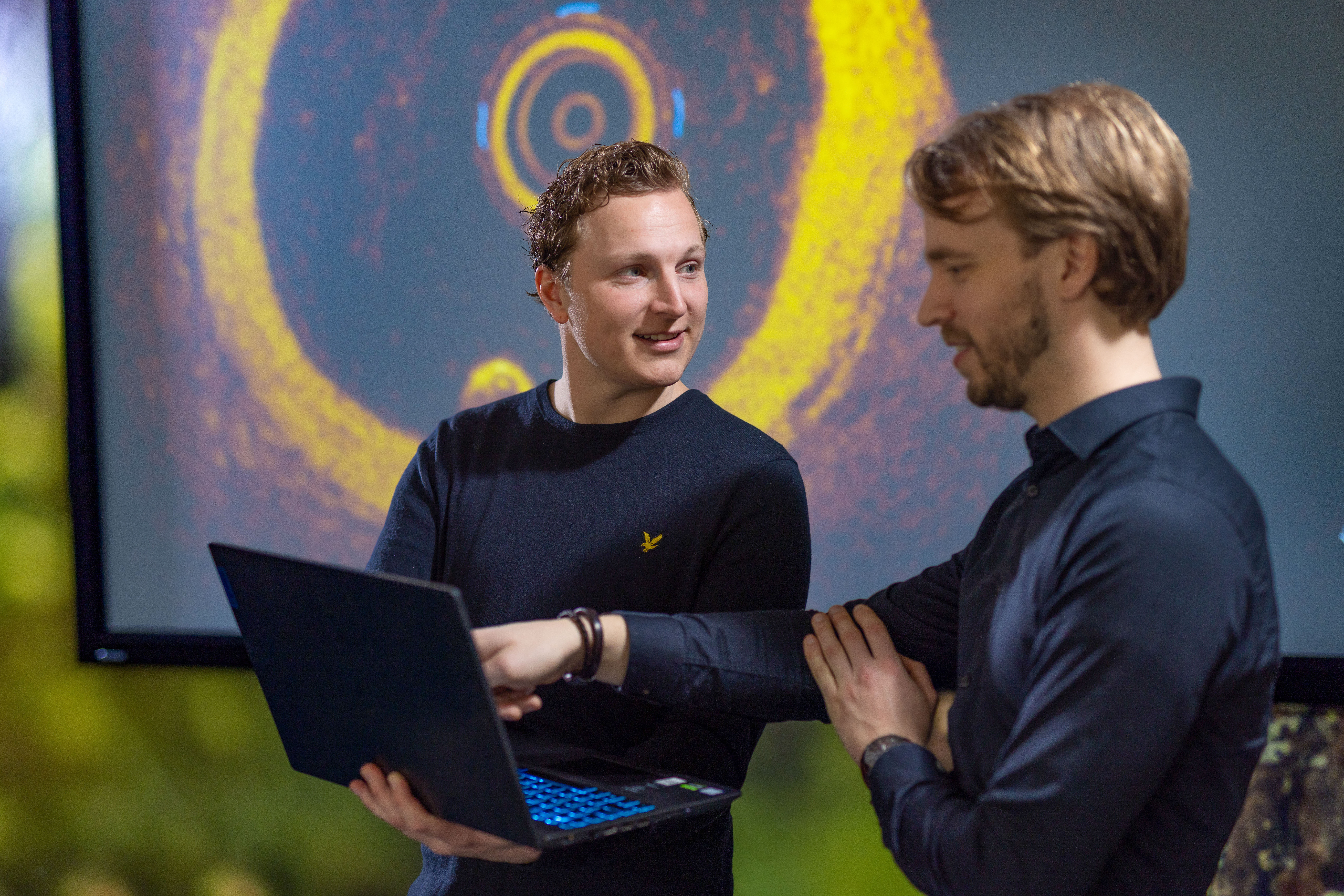
The imaging technique employed is optical coherence tomography (OCT), which utilizes near-infrared light to visualize the microscopic structure of vessel walls. A small camera is inserted into the bloodstream via the arm to capture these images. While OCT is already used clinically to guide stent placement and ensure correct positioning, its application has been limited to the immediate area of a blockage.This research indicates the potential for broader application,scanning entire arteries for vulnerabilities.
A significant hurdle to widespread OCT use is the sheer volume of data generated. The camera produces 540 images at a time, making manual analysis challenging and time-consuming, even for experienced clinicians. Currently, only a handful of specialized labs possess the capacity to analyse these images comprehensively, and the process is both expensive and labor-intensive.
To address this, Thannhauser’s team developed an AI capable of analyzing the entire image set. The AI’s performance is as reliable as that of a specialized lab, but significantly faster. While the AI is already assisting doctors during stent placement using OCT, Thannhauser anticipates that routine scanning of entire blood vessels for weak spots in a clinical setting is still several years away.
