
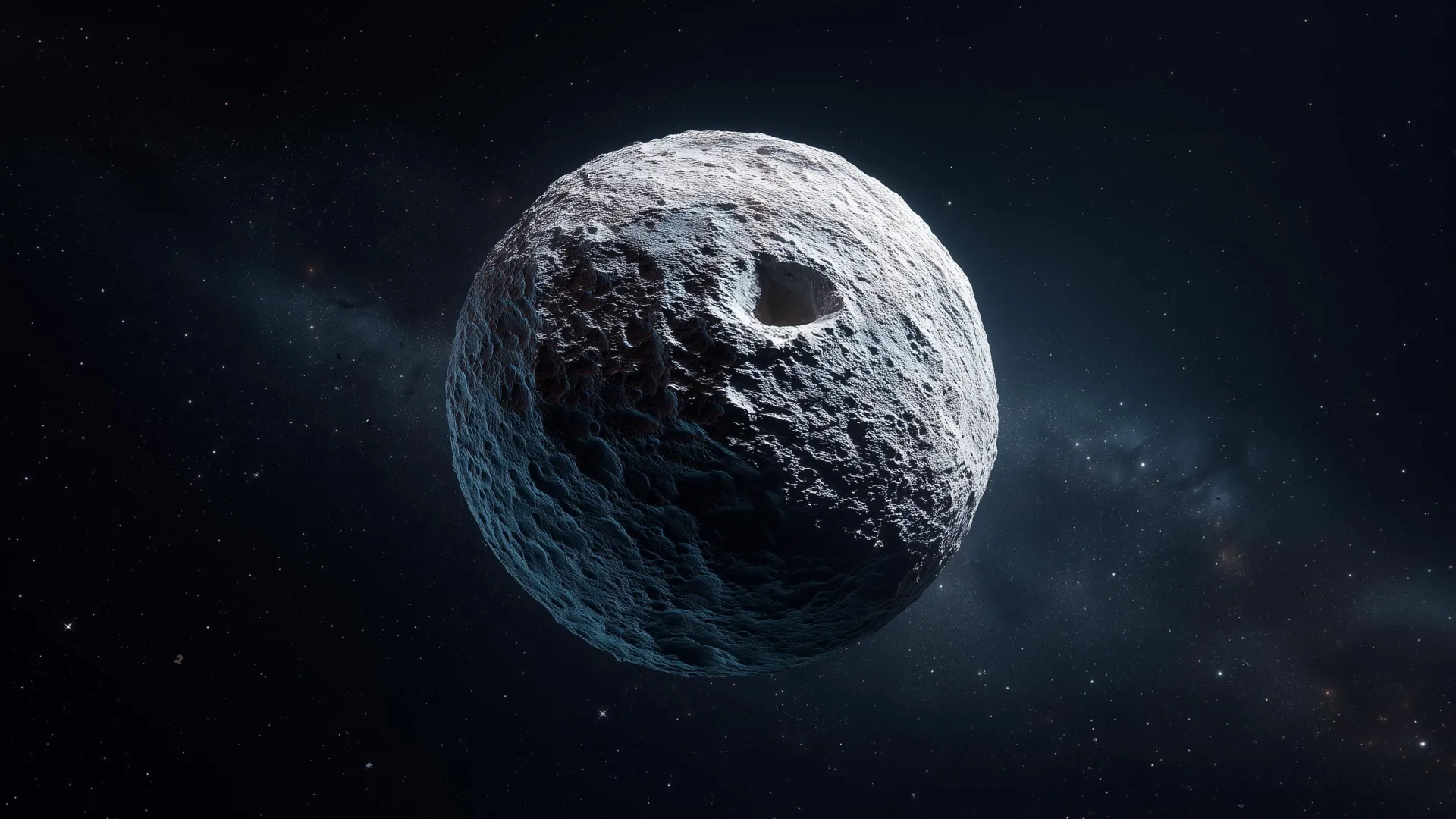
Distant Object Reshapes Solar System History
New ‘Sednoid’ Discovery Challenges Planetary Formation Models
Astronomers utilizing the Subaru Telescope have unveiled a mysterious celestial body lurking beyond Pluto, a discovery that could fundamentally alter our understanding of the outer Solar System’s formation and current configuration.
A Rare Cosmic Encounter
Designated 2023 KQ14, this newly identified object was detected as part of the FOSSIL (Formation of the Outer Solar System: An Icy Legacy) project. The discovery, made through observations spanning March, May, and August 2023, leverages the Subaru Telescope’s expansive field of view. Subsequent tracking of 2023 KQ14‘s orbit over nearly two decades, aided by observations from the Canada-France-Hawaii Telescope and archival data, revealed its unusual trajectory.
Its peculiar, distant orbit has led to its classification as a “sednoid,” an exceptionally rare category of celestial body. To date, only three other such objects have been identified, making 2023 KQ14 the fourth known example.
Implications for Solar System Structure
Advanced numerical simulations, some performed on the National Astronomical Observatory of Japan’s PC cluster, suggest that 2023 KQ14 has maintained a stable path for an astonishing 4.5 billion years. While its current orbital path diverges from that of the other sednoids, simulations indicate their orbits were strikingly similar around 4.2 billion years ago, pointing to a shared, formative past.
The divergence in current orbits suggests a greater complexity and diversity within the outer Solar System than previously acknowledged. This finding also imposes new restrictions on the widely discussed “Planet Nine” hypothesis. If such a planet exists, its orbit would need to be situated even farther out than current predictions suggest.
Challenging Existing Theories
Dr. Yukun Huang, who performed simulations of the object’s orbit at the National Astronomical Observatory of Japan, commented on the implications.
“The fact that 2023 KQ14‘s current orbit does not align with those of the other three sednoids lowers the likelihood of the Planet Nine hypothesis. It is possible that a planet once existed in the Solar System but was later ejected, causing the unusual orbits we see today.”
—Dr. Yukun Huang, National Astronomical Observatory of Japan
The discovery area for 2023 KQ14 lies far beyond the gravitational influence of Neptune. The presence of objects with elongated orbits and significant perihelion distances in this remote region strongly suggests significant cosmic events occurred during the Solar System’s ancient history. Understanding the orbital dynamics and physical characteristics of these unique, distant bodies is paramount to reconstructing the Solar System’s complete history.
Dr. Fumi Yoshida emphasized the importance of this find.
“2023 KQ14 was found in a region far away where Neptune’s gravity has little influence. The presence of objects with elongated orbits and large perihelion distances in this area implies that something extraordinary occurred during the ancient era when 2023 KQ14 formed. Understanding the orbital evolution and physical properties of these unique, distant objects is crucial for comprehending the full history of the Solar System. At present, the Subaru Telescope is among the few telescopes on Earth capable of making such discoveries. I would be happy if the FOSSIL team could make many more discoveries like this one and help draw a complete picture of the history of the Solar System.”
—Dr. Fumi Yoshida
The Subaru Telescope remains at the forefront of such groundbreaking discoveries, with researchers hopeful for further insights into our Solar System’s past. For context, the Kuiper Belt, a region beyond Neptune, is estimated to contain hundreds of thousands of icy bodies larger than 100 km across, and trillions of comets. (NASA)
