
Bolsonaro Scion’s Presidential Bid Draws Mixed Reactions, Fuels Right-Wing Uncertainty
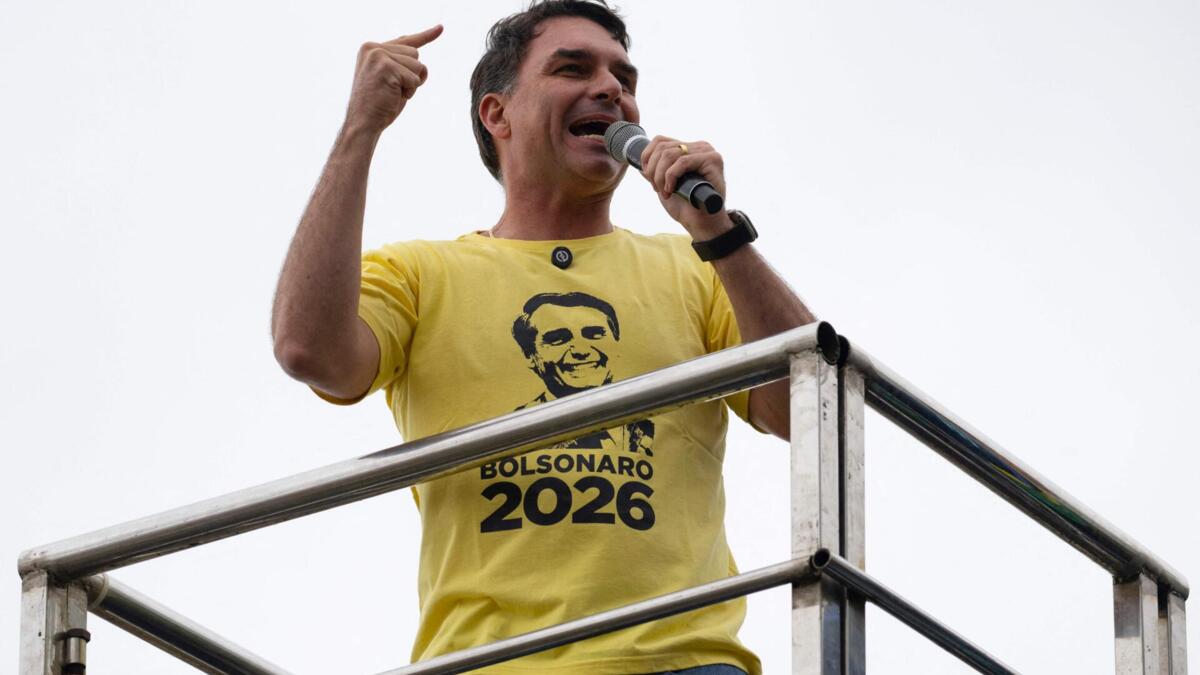
flávio Bolsonaro, Senator from Rio de Janeiro and eldest son of former President Jair Bolsonaro, has announced his intention to run for president, framing the decision as a continuation of his father’s “nation project.” The proclamation has been met with enthusiasm from staunch Bolsonaristas, and cautiously optimistic calculations within the current government, while concurrently sparking skepticism from key political players and unsettling financial markets.
The move comes after speculation within the Bolsonaro family, notably heightened by the relocation of Flávio‘s brother, Congressman Eduardo Bolsonaro, to the United States, where he has publicly advocated for punitive tariffs against Brazil. The government, according to reports from G1, hopes Flávio bolsonaro’s candidacy will replicate the polarizing dynamic of the 2022 election, leveraging the strong reactions - both positive and negative – associated with the Bolsonaro name.
However, the influential “Centrão” parliamentary bloc, known for pragmatism over ideology, has expressed doubts about Flávio Bolsonaro’s viability. Sources speaking to Folha de S. Paulo and O Globo suggest the senator will struggle to unify the right-wing electorate, a feat they believe Governor of São Paulo, Tarcísio de freitas, is better positioned to achieve.
Freitas, a former minister under Bolsonaro, is currently weighing a run for reelection as governor or a bid for the presidency. His potential candidacy is complex by the Bolsonaro family’s desire to maintain influence, and he has been hesitant to formally declare his intentions. Political observers believe Freitas possesses broader appeal, perhaps being perceived as a more “moderate” candidate.
Recent polling data supports this assessment. An AtlasIntel survey released Tuesday showed President Lula da Silva leading Flávio Bolsonaro 47.3% to 23.1% in a first-round scenario. With Freitas on the ballot, Lula’s support remains at 48.4%, but Freitas gains significant ground with 32.5%. A hypothetical second-round matchup between Lula and Freitas is notably tighter, at 49% to 47%.
The announcement of Flávio Bolsonaro’s candidacy triggered a negative reaction in financial markets. The São Paulo Stock Exchange experienced a 4.31% drop on Friday – its largest decline since February 2021 - while the value of both the dollar and euro increased by over 2% against the Brazilian real.
Analysts attribute this volatility to concerns about fragmentation within the right-wing vote. ”Initially, the candidacy of tarcísio de Freitas was considered, who, as governor of São Paulo, already had a consolidated electoral base and a favorable projection,” explained Marcos Praça, director of analysis at Zero Markets Brasil, to G1.The situation underscores the complex dynamics at play as Brazil’s political landscape prepares for the next presidential election.
