
IndiaS Sun Mission Braces for Peak Solar Activity in 2026, Revealing Potential Threats to Space infrastructure
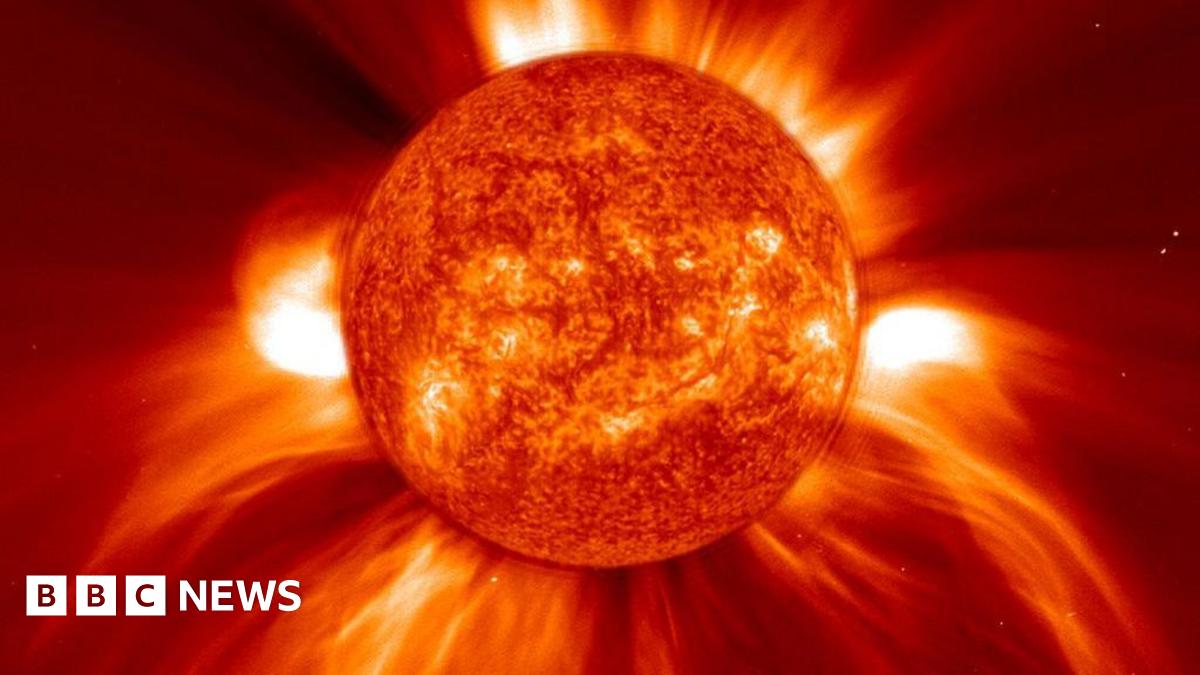
India’s Aditya-L1 mission is preparing for a critical phase as the Sun approaches the peak of its activity cycle in 2026, a period scientists anticipate will deliver unprecedented data on coronal mass ejections (CMEs) and their impact on near-Earth space. Recent analysis of a “medium-sized” CME observed by the mission revealed a staggering energy release equivalent to 2.2 million megatons of TNT – dwarfing the atomic bombs dropped on Hiroshima and Nagasaki (15 and 21 kilotons respectively) – and a temperature of 1.8 million degrees Celsius.
This forthcoming period of heightened solar activity is crucial because it will allow researchers to benchmark the Sun’s potential for extreme events and refine strategies for protecting vital satellite infrastructure. While the observed CME was substantial, scientists note that the asteroid believed to have caused the extinction of the dinosaurs released energy equivalent to 100 million megatons, and the Sun is capable of producing CMEs exceeding even that magnitude during its maximum activity.
professor Ramesh, a key figure in the Aditya-L1 project, emphasized the significance of understanding these events. “I consider the CME we evaluated to have occurred when the Sun was in the normal activity phase. Now this sets the benchmark that we’ll be using to evaluate what is in store when the maximum activity cycle occurs,” he stated.
The Aditya-L1 spacecraft, positioned in a halo orbit around the Sun-Earth Lagrange point 1, is uniquely positioned to continuously observe the sun’s activity without being hampered by earth’s atmosphere. Data gathered during the 2026 peak will be instrumental in developing countermeasures to shield satellites from the disruptive effects of CMEs, which can interfere with communications, navigation systems, and power grids.
Beyond satellite protection, the mission aims to improve our overall understanding of near-Earth space and the complex interactions between the Sun and our planet. ”The learnings from this will help us…gain a better understanding of near-Earth space,” Professor Ramesh added.
