
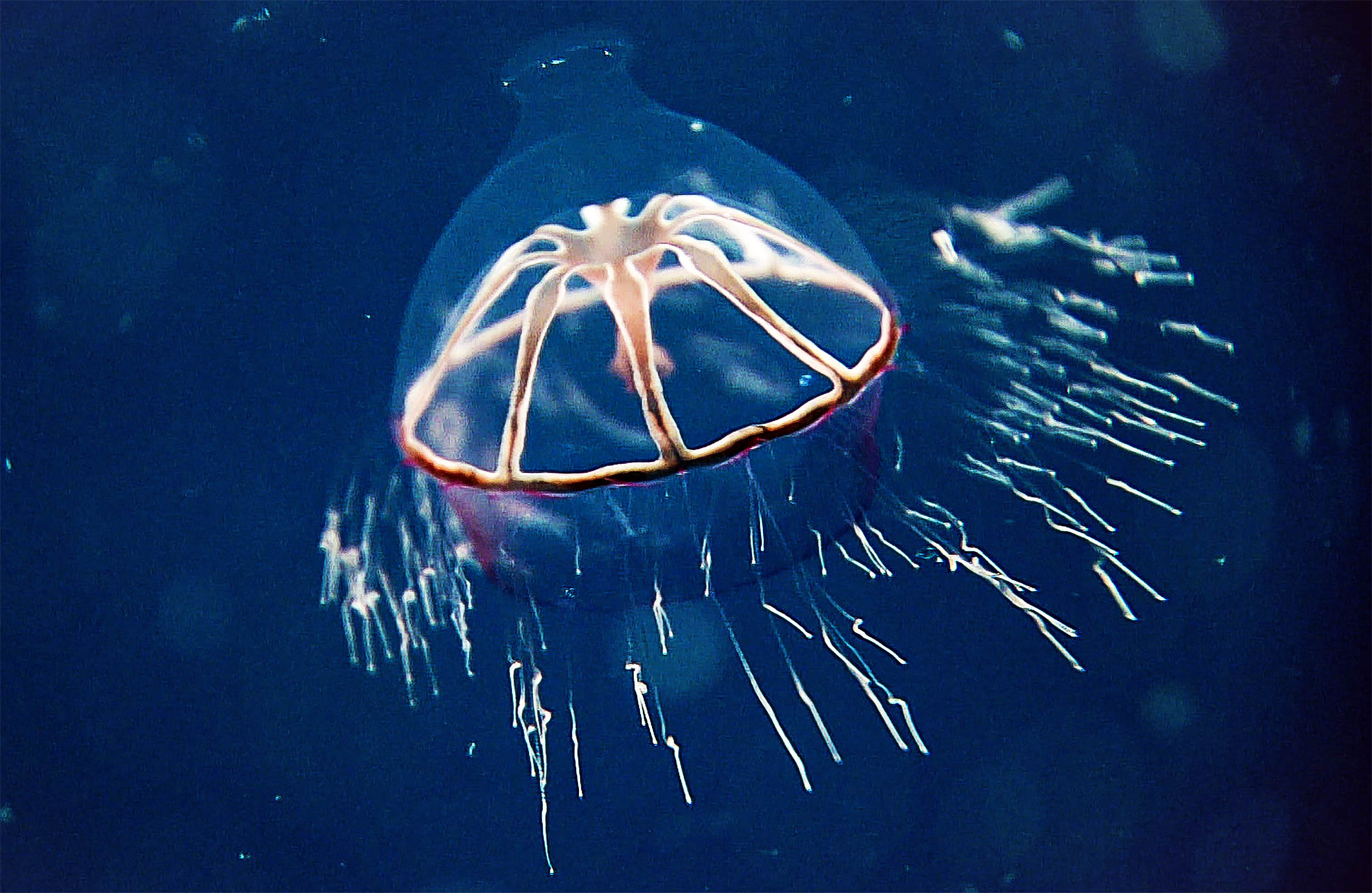
Ocean Currents & a “Soft barrier” Explain Arctic Jellyfish‘s Unexpected Florida Appearance
MIAMI,FL - A newly published study in deep Sea Research reveals how an Arctic jellyfish,Botrynema brucei ellinorae,made the remarkable journey to Florida waters – and why only the “knobbed” version of the species was observed. Researchers have identified a previously unknown “soft barrier” in the North Atlantic that appears to limit the distribution of the jellyfish’s different forms.
The jellyfish’s southward trek is believed to have been facilitated by the Deep Western Boundary Current, a southward-flowing branch of the ocean conveyor belt originating near Greenland. This deep-sea current allowed the jellyfish to drift thousands of kilometers without active swimming, connecting Arctic deep-sea communities to lower-latitude basins.
However, the study highlights a critical transition zone within the North Atlantic Drift, characterized by shifts in water temperature, chemistry, prey availability, and predator presence. North of this zone,both knobbed and knobless morphs of B. brucei ellinorae coexist. Surprisingly, south of the zone, only the knobbed form has been found.
Researchers theorize the knob provides a selective advantage in the warmer, predator-rich midwaters south of the barrier. “It could keep specimens without a knob confined to the north while allowing the free transit of specimens with a knob further south, with the knob possibly giving a selective advantage against predators outside the Arctic and sub-Arctic regions,” explained lead author Dr. Javier Montenegro.
This revelation underscores how subtle changes in ocean conditions can act as invisible boundaries, dictating where species can thrive. While deep currents can transport organisms across vast distances, these “soft barriers” ultimately determine which populations can successfully establish themselves in new environments. The research, based on genetic analysis of a pale-pink specimen found in Florida, provides a compelling example of how hidden ocean dynamics shape the distribution of marine life.
