
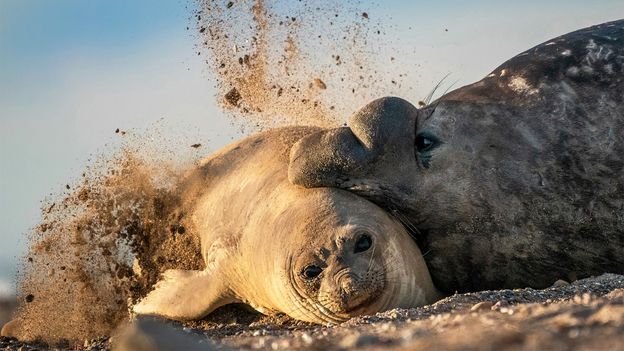
Bird Flu Reaches sub-Antarctic Islands, threatening Elephant Seal Populations
Heard and McDonald Islands, Australia – A highly contagious bird flu strain has potentially spread to the Australian sub-Antarctic islands of Heard and McDonald, located less than 500km (311 miles) from Kerguelen Island where initial outbreaks were observed. Researchers have discovered several dead elephant seals, including pups, on the islands, though testing for the virus is still pending. This development raises concerns as Australia remains the only continent currently free from the highly contagious bird flu.
The initial impact of the virus was first witnessed by a research team led by Dr. Thierry Boulinier, who, wearing hazmat suits, collected samples from live animals and carcasses last season to understand the virus’s spread and potential for immunity development. Analysis of blood samples from elephant seals in the region has largely been negative for antibodies, indicating a meaningful portion of the population remains vulnerable. “That raises concerns,” says Boulinier,who is preparing to return to the islands for continued monitoring in the coming weeks. “If ther is another outbreak this year,it may also be devastating.”
The threat is particularly acute for seal species endemic to Antarctica and Sub-Antarctic regions,where mass die-offs could have irreversible consequences. Elephant seals play a critical role in the marine ecosystem as top predators, and a population decline could trigger a “cascade” of harm, altering the balance of species throughout the food chain.
“Elephant seals are also especially critically important as an ‘ocean fertiliser’,” explains researcher Marion Uhart. These animals are exceptional divers, capable of holding their breath for up to two hours and descending as deep as 2.1km (7,000ft) while foraging for fish. In the process, they spread nutrients from their faeces throughout different water layers, providing sustenance for othre marine life.
The potential for further outbreaks and the lack of existing immunity within the elephant seal population underscore the urgency of ongoing research and monitoring efforts.
