
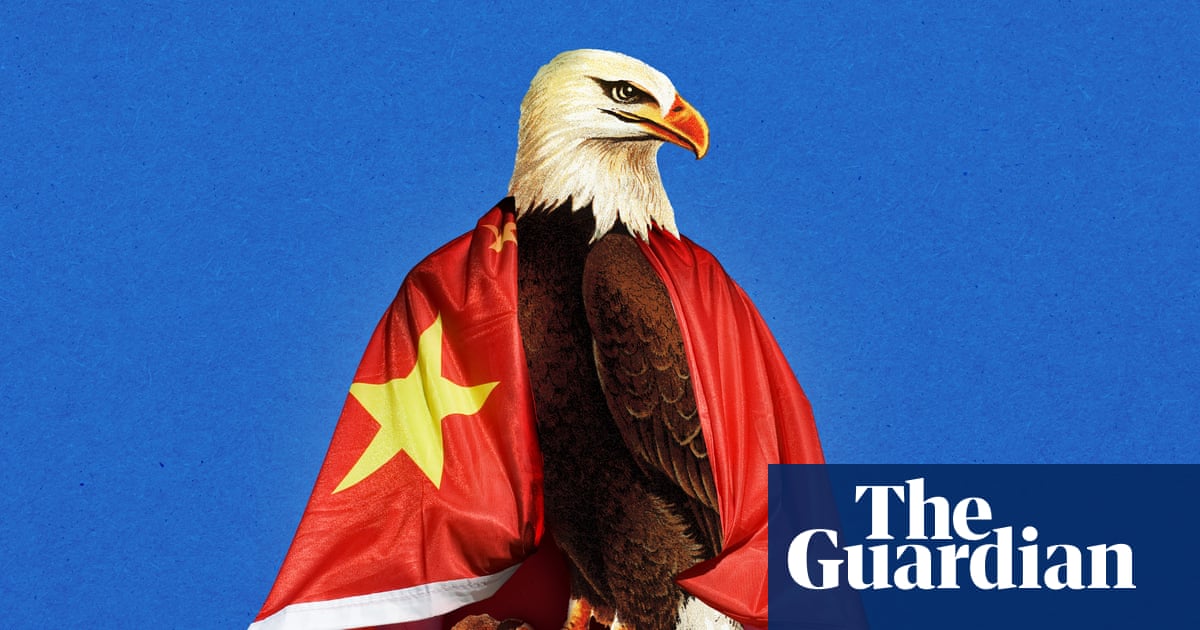
A Shift in Perspective: Chinese Intellectuals re-evaluate the American Model
Recent observations suggest a notable shift in how Chinese intellectuals view the United States, moving away from a long-held admiration for its democratic ideals. This change is fueled by concerns over increasing political polarization, perceived declines in American governance, and, surprisingly, parallels drawn between certain trends in the US and the authoritarian practices common in China.
The article highlights a growing unease among Chinese liberals regarding developments in the US, especially since the presidency of Donald Trump.Where the US once served as a “beacon of constitutional democracy,” it is indeed now seen by some as a “dimmer lighthouse.” This disillusionment stems from several factors.
One key concern is the rise of what some perceive as social surveillance, not by the state directly, but through social media users – a dynamic that echoes practices within China. Georgia State University Associate Professor Maria Repnikova notes a worrying trend of individuals being targeted for dissenting opinions and public speech being monitored on sensitive issues, mirroring surveillance tactics employed by the Chinese Communist Party (CCP). Reports of students reporting on teachers further amplify these concerns, recalling similar encouragement of surveillance within China.
Beyond surveillance, the blurring lines between government and private industry in the US are also drawing comparisons to China. The Trump management’s acquisition of stakes in companies deemed vital to national security has raised anxieties among investors about increased government intervention, a practice commonplace in China where state and private sectors are often intertwined.
However,the article emphasizes that notable differences remain.US courts have successfully challenged and overturned numerous actions taken by the Trump administration, a scenario unimaginable within China’s CCP-controlled judiciary. Moreover, news organizations, like The Guardian, have resisted attempts by the Pentagon to control reporting, demonstrating a level of press freedom absent in China.
Despite these distinctions, the perceived erosion of academic freedom in the US is particularly striking to Chinese intellectuals. While US universities are grappling with debates over diversity, inclusion, and free speech, Chinese universities are entirely state-owned, with leaders appointed by the government and lacking the autonomy to dissent.
this shift in perspective is so profound that some individuals are now expressing more fear of criticizing domestic politics within the US than they are of criticizing Chinese leadership. One US-based professor, specializing in US-China relations, declined to be interviewed, citing fear of censorship – a sentiment previously associated with life under a more authoritarian regime.
Despite these concerns, Isaac Stone Fish, founder of Strategy Risks, maintains that the US, even in a state of crisis, would remain significantly freer and more open than China under Xi Jinping.However, the article underscores a growing sense of discomfort among Chinese liberals, who are finding the perceived shortcomings of the American system increasingly difficult to reconcile with their past ideals, even acknowledging potential benefits of China’s current trajectory in areas like environmental improvement and technological development.
