
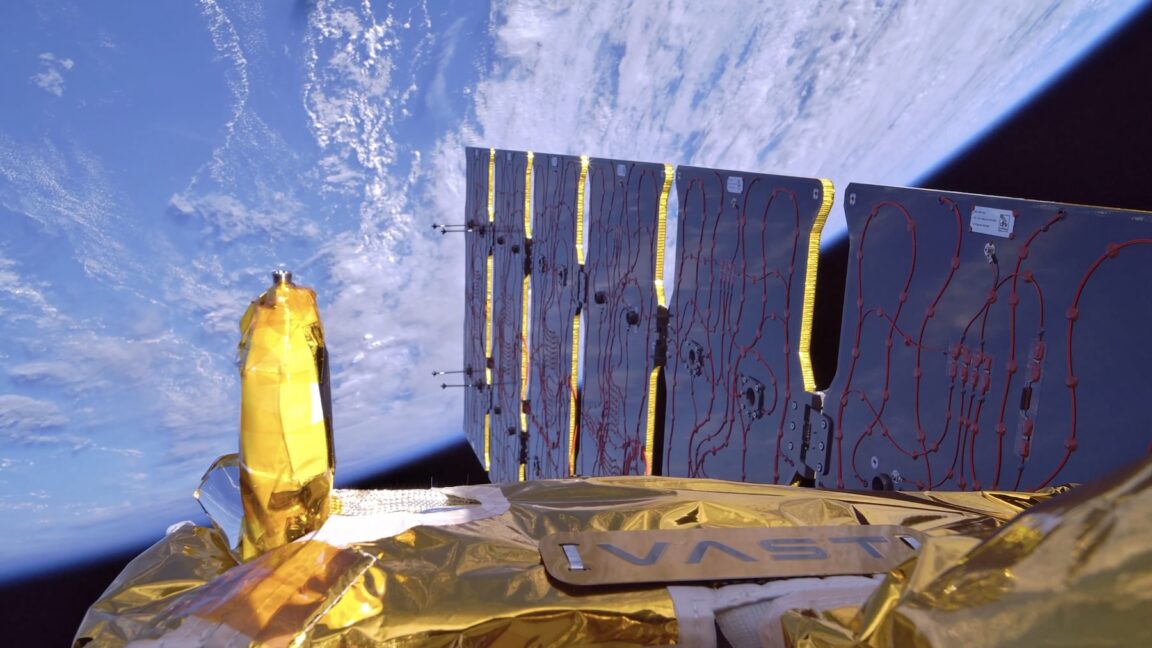
Commercial space Station Startup Vast Space Achieves In-Orbit Validation with Demo Mission
LOS ANGELES – Vast Space, a startup aiming to build commercial space stations, has successfully deployed a demonstration satellite to validate key technologies for its planned Haven-1 habitat. The satellite, currently orbiting at 300 miles (500 kilometers), is testing Vast’s computer, power, software, guidance and control, propulsion, and radio systems – representing a notable step toward the company’s long-term vision of privately owned and operated space destinations.
Haven-1, Vast’s first habitat module, is currently undergoing final preparations for launch, slated for no earlier than May 2026. Measuring approximately 33 feet (10.1 meters) long and 14 feet (4.4 meters) wide, the module will offer a habitable volume of roughly 1,600 cubic feet (45 cubic meters)-smaller than a primary module on the International Space Station, but five times larger than a SpaceX Dragon capsule.
The Haven Demo mission serves as a crucial precursor to Haven-1, utilizing “architecturally similar” systems. For instance, Haven-1 will incorporate 12 solar arrays identical to the single array on the demo satellite, and will employ the same thrusters, valves, and tanks found in the pathfinder’s propulsion system.
Currently, Haven-1 is at NASA’s Neil Armstrong test Facility in Ohio for rigorous environmental testing, including acoustics, vibration, and electromagnetic interference assessments, as well as simulated exposure to the extreme temperatures and vacuum of low-Earth orbit. Following testing, the module will be transported to Cape Canaveral, Florida, for final launch preparations.
Onc operational, Haven-1 will host a series of two-week crew visits utilizing SpaceX’s Dragon spacecraft. Vast’s ultimate goal extends beyond Haven-1, with plans for a larger, multi-module station called Haven-2, envisioned to support extended missions and larger crews in the 2030s.
