
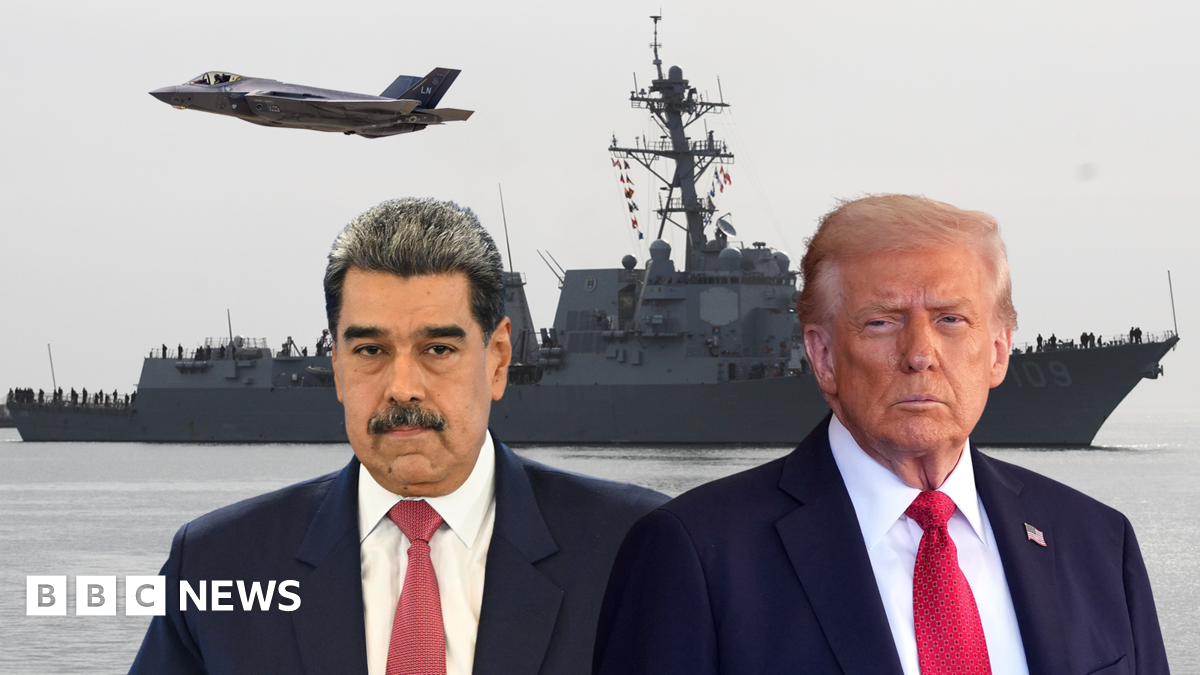
Trump administration Weighs Options in Venezuela, From Drug Interdiction to Regime Change
WASHINGTON – The Trump administration is signaling a potentially escalating involvement in venezuela, leaving open the possibility of both a focused crackdown on drug trafficking and a broader effort to remove Nicolás Maduro from power. President Trump has declined to rule out covert action against Maduro, stating it would be “ridiculous” to answer a direct question about CIA authorization for such operations, while also indicating the U.S.is “looking at land now,” suggesting consideration of military operations within Venezuela.
The ambiguity surrounding the administration’s goals is fueling debate among analysts. While publicly framing actions as a fight against narcotics, officials haven’t dismissed the potential for regime change. Ned Price, a former CIA senior analyst and State Department senior adviser currently serving as deputy to the US representative to the United Nations, explained the breadth of CIA covert action, stating it ”can be information operations…sabotage operations…funding opposition parties…[and] go as far as the overthrow of a regime.”
Despite Venezuela not being a major hub for drug production – lacking notable cocaine or fentanyl labs, according to Dr. Sabatini – the U.S. could target airstrips or ports suspected of facilitating trafficking. Some analysts suggest a more aggressive approach, like a missile strike on military barracks believed to be involved in the drug trade. Dr. Sabatini noted,”If he wants to be aggressive,he could send a missile to a military barrack. There is pretty good intelligence certain sectors of the military are involved in cocaine trafficking.”
More dramatically, the U.S. could attempt a “smash and grab situation” to seize Maduro or his allies for prosecution in the United States. However, the effectiveness of any military pressure to induce defections within Maduro’s government remains uncertain. Professor Albertus questioned whether the current military build-up is sufficient to prompt such defections, and whether it will ultimately lead to an attempt to forcibly dislodge the Maduro regime.
The past context of U.S. intervention in Latin America adds another layer of complexity. The CIA’s past involvement in regime change and support for right-wing dictatorships in countries like Chile and Brazil has fostered deep suspicion throughout the region.Currently,a significant U.S. military presence is stationed in the Caribbean, raising questions about the duration of this deployment and the administration’s ultimate intentions.
