
Rethinking Dark Matter in the Face of the Galactic Center’s mysterious Glow
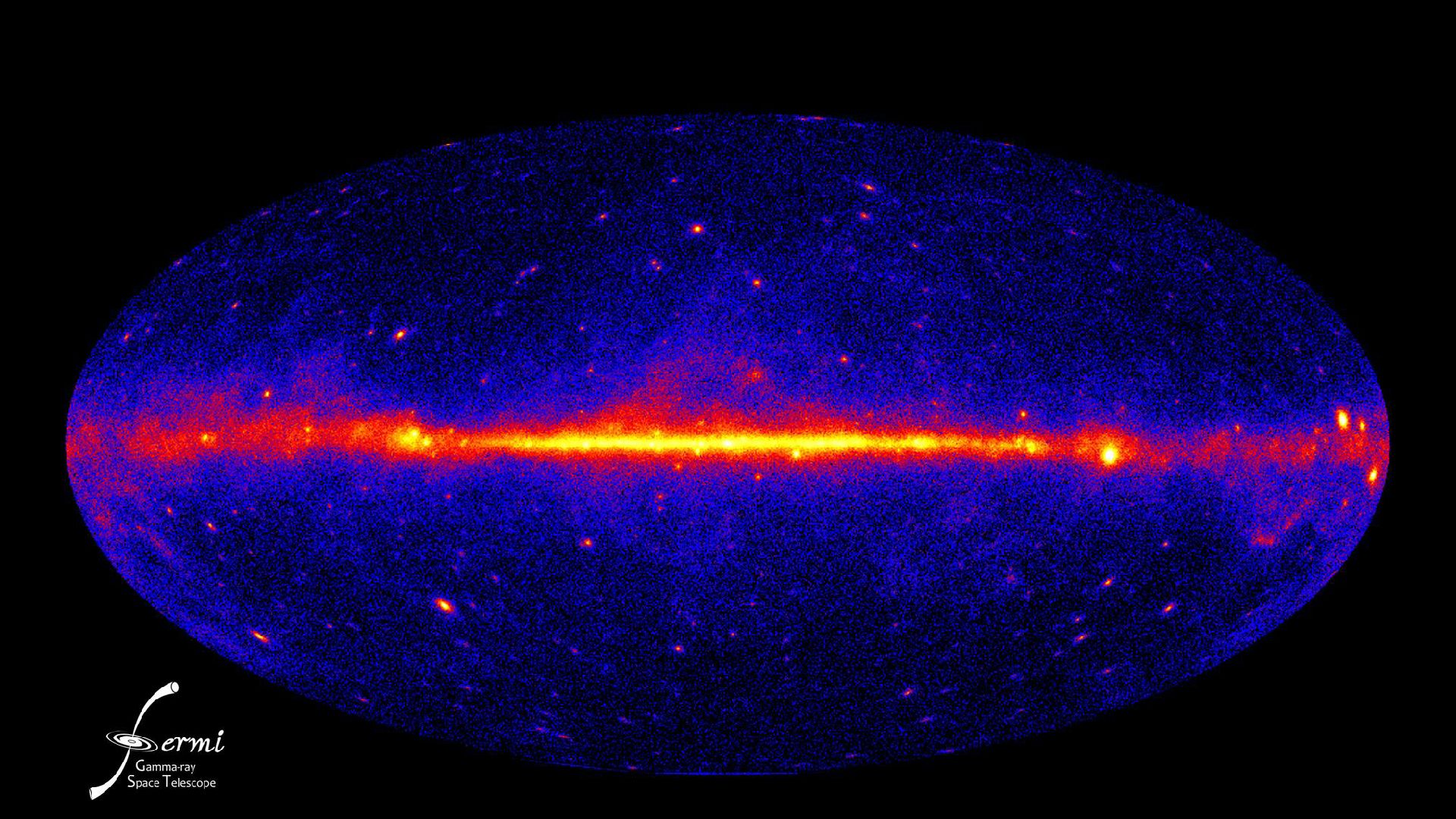
For over a decade, a puzzling excess of gamma rays emanating from the center of the Milky Way has challenged our understanding of the universe. This mysterious glow has sparked debate between two leading explanations: dark matter annihilation adn a multitude of unseen pulsars. Now, new research suggests a key assumption in the dark matter interpretation may have been flawed, potentially revitalizing the theory.
A team led by Miguel Muru revisited the long-held belief that dark matter distribution within the inner galaxy is spherical. Utilizing the high-resolution HESTIA suite of computer simulations – designed to recreate Milky Way-like galaxies in a realistic cosmic environment - the researchers investigated the behavior of dark matter near the galactic center.
Their findings, published recently, demonstrate that gravitational interactions and past galactic mergers can substantially distort the shape of dark matter.Instead of a sphere, the simulations revealed a flattened, oval or box-like distribution, mirroring the shape of the galaxy’s central stellar bulge.
“Our most critically important result was showing that a reason why the dark matter interpretation was disfavored came from a simple assumption,” Muru explained.”We found that dark matter near the center is not spherical – it’s flattened.This brings us a step closer to revealing what dark matter really is, using clues coming from the heart of our galaxy.”
This revised understanding of dark matter’s shape has significant implications. The predicted pattern of gamma-rays resulting from dark matter annihilation would naturally resemble the observed glow if the dark matter isn’t spherical. Essentially, the dark matter description may have been underestimated due to scientists employing an inaccurate model of its distribution.
Though, the debate remains open. Distinguishing between dark matter and pulsars requires more precise observations. “A clear indication for the stellar explanation would be the discovery of enough pulsars to account for the gamma-ray glow,” Muru stated.
astronomers are eagerly anticipating data from next-generation telescopes, including the square Kilometre Array (SKA) and the Cherenkov Telescope Array (CTA), to help resolve the mystery. The discovery of numerous, tiny point-like sources at the galactic center would support the pulsar hypothesis.Conversely, a continued smooth and diffuse radiation pattern would strengthen the case for dark matter.
Muru notes that a definitive “smoking gun” for dark matter would be a signal that precisely matches theoretical predictions, requiring both improved modeling and advanced telescopes. He also suggests exploring other potential testing grounds, such as the central regions of nearby dwarf galaxies.
Regardless of the ultimate source of the gamma-ray excess, Muru’s research underscores the importance of understanding the structure of our galaxy.By reshaping our understanding of the Milky Way’s dark core, scientists are making progress towards unraveling the enduring mystery of what dark matter truly is.
