
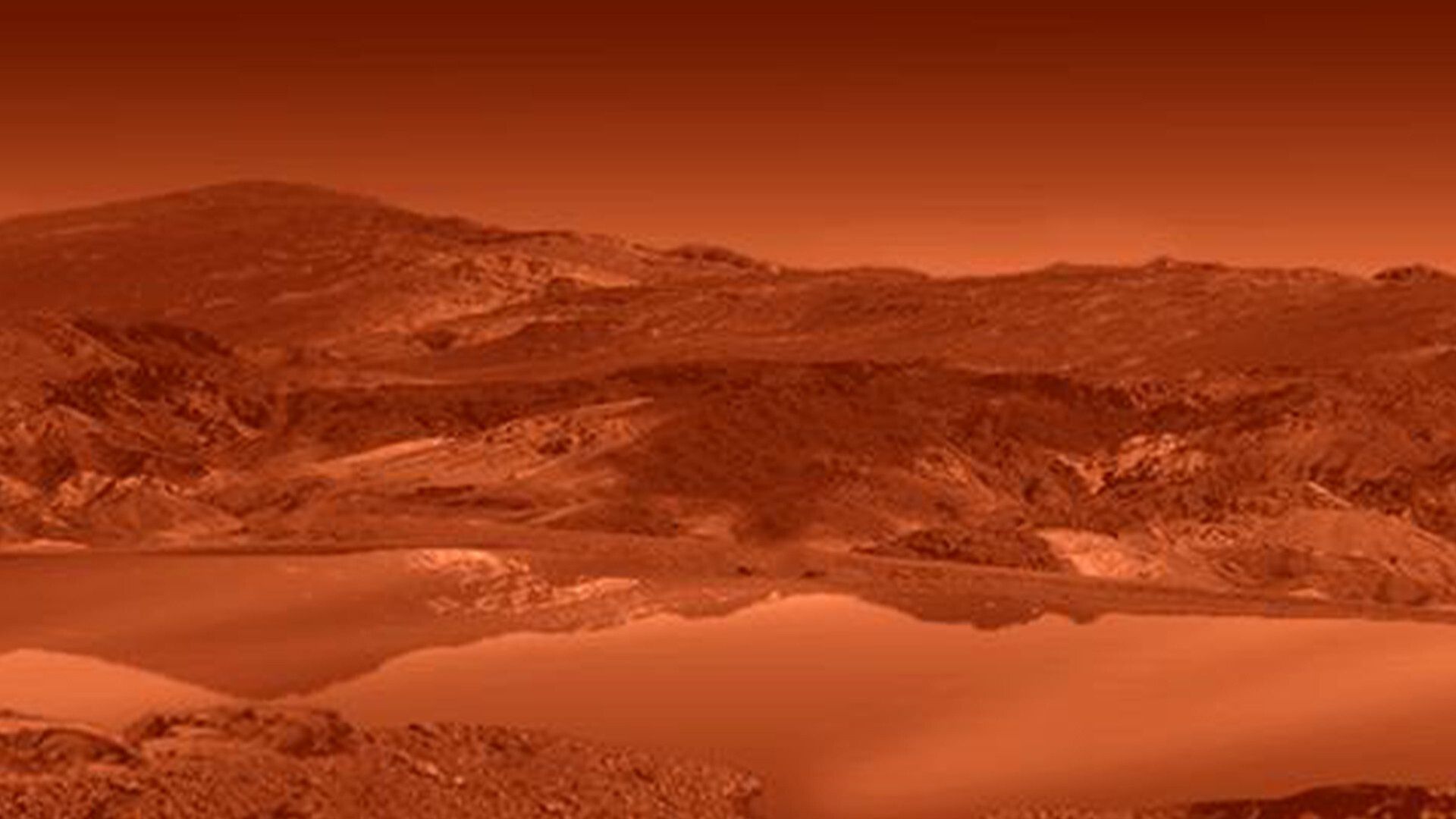
Unexpected Chemistry on Titan: A New Understanding of its Landscape
Titan, Saturn‘s largest moon, possesses an atmosphere vastly different from our own, yet remarkably similar to what scientists believe Earth’s early atmosphere was like – rich in nitrogen and methane. New research from a team at Chalmers University of Technology and NASA is adding a surprising piece to this puzzle, challenging fundamental chemical principles.
Published in the journal PNAS, the study reveals an unexpected interaction between common Titanian compounds: methane, ethane, and hydrogen cyanide (HCN). Contrary to the established rule of “like dissolves like” – where polar and nonpolar substances typically remain separate – these molecules can actually mix at the extremely cold temperatures found on Titan (around -180°C).
NASA scientists initially observed this unusual behavior while testing mixtures of HCN,methane,and ethane at approximately 90 Kelvin.They found the molecules remained intact, but their arrangement had changed. To understand this phenomenon, they turned to Martin Rahm’s group at Chalmers, experts in HCN research.
Through extensive computer simulations, the Chalmers team tested thousands of potential solid structures.They discovered that hydrocarbons (methane and ethane) can actually penetrate and become integrated within the HCN crystal lattice, forming stable crystals that match the spectral data collected by NASA.
“the question we asked ourselves was a bit crazy: can the measurements be explained by a crystal structure in which methane or ethane mixes with hydrogen cyanide?” explains Rahm. “This contradicts the rule of chemistry ‘like dissolves like’.” This discovery suggests a broadening of our understanding of chemical interactions.
This unexpected interaction has significant implications for understanding Titan’s geology, potentially influencing our knowledge of its lakes, seas, and dunes. As Rahm notes, “These are very exciting findings that may help us understand something on the scale of the entire moon, which is similar in size to Mercury.”
future research will be propelled by the Dragonfly mission, slated to launch in 2028. This NASA-built drone will explore Titan’s surface from the air in 2034, analyzing its prebiotic chemistry and searching for signs of life, past or present. Until then, the chalmers and NASA team will continue to investigate HCN chemistry and potential mixtures in these frigid space environments.
