
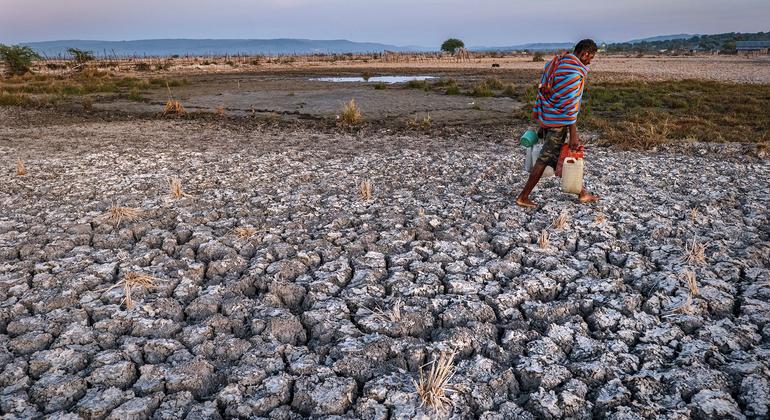
Climate Crisis Deepens Global Poverty: New Report Highlights Intertwined Challenges
A new report released Friday by the UN Development Program (UNDP) and Oxford University reveals a stark connection between climate change and multidimensional poverty,ahead of next month’s COP30 climate summit in Brazil. For the first time, the report overlays climate hazard data with poverty metrics, demonstrating how the climate crisis is actively reshaping the landscape of global poverty.
The report identifies 1.1 billion people worldwide living in multidimensional poverty - encompassing deprivations in health, education, and living standards. A important 887 million of these individuals are directly exposed to at least one climate hazard, including high heat, air pollution, flooding, and drought. Alarmingly, 651 million face two or more simultaneous climate shocks, with 309 million enduring three or four.
South Asia and sub-Saharan africa are identified as geographical hotspots,home to 380 million and 344 million poor people impacted by climate hazards respectively. In South Asia,a staggering 99.1% of those living in poverty are confronting at least one climate shock, and 351 million (91.6%) face two or more.
The report also highlights a concerning trend: middle-income countries are disproportionately affected. They house nearly two-thirds of the world’s poor and are experiencing a notable convergence of climate crisis impacts and poverty. Approximately 548 million poor people in lower middle-income countries are exposed to at least one climate hazard, with over 470 million facing two or more.
Furthermore,the Global Multidimensional Poverty Index (MPI) report indicates that nations currently experiencing higher levels of multidimensional poverty are projected to experience the most significant temperature increases by the end of the century.
“Poverty is no longer a standalone socio-economic issue,” stated Haoliang xu, acting Administrator of UNDP. “It is compounded by and interlinked with the increasingly dramatic effects of the climate emergency.”
the report emphasizes the urgent need for integrated solutions, aligning poverty reduction efforts with climate mitigation, adaptation, and ecosystem restoration. UNDP officials express optimism, stating that as they approach COP30, they carry forward a message of “hope and cooperation,” confident that existing knowledge can be leveraged to continue supporting vulnerable populations and countries.
