
Brussels Metro 3 Project Faces Scrutiny and Mounting Costs Following Court of Auditors Report
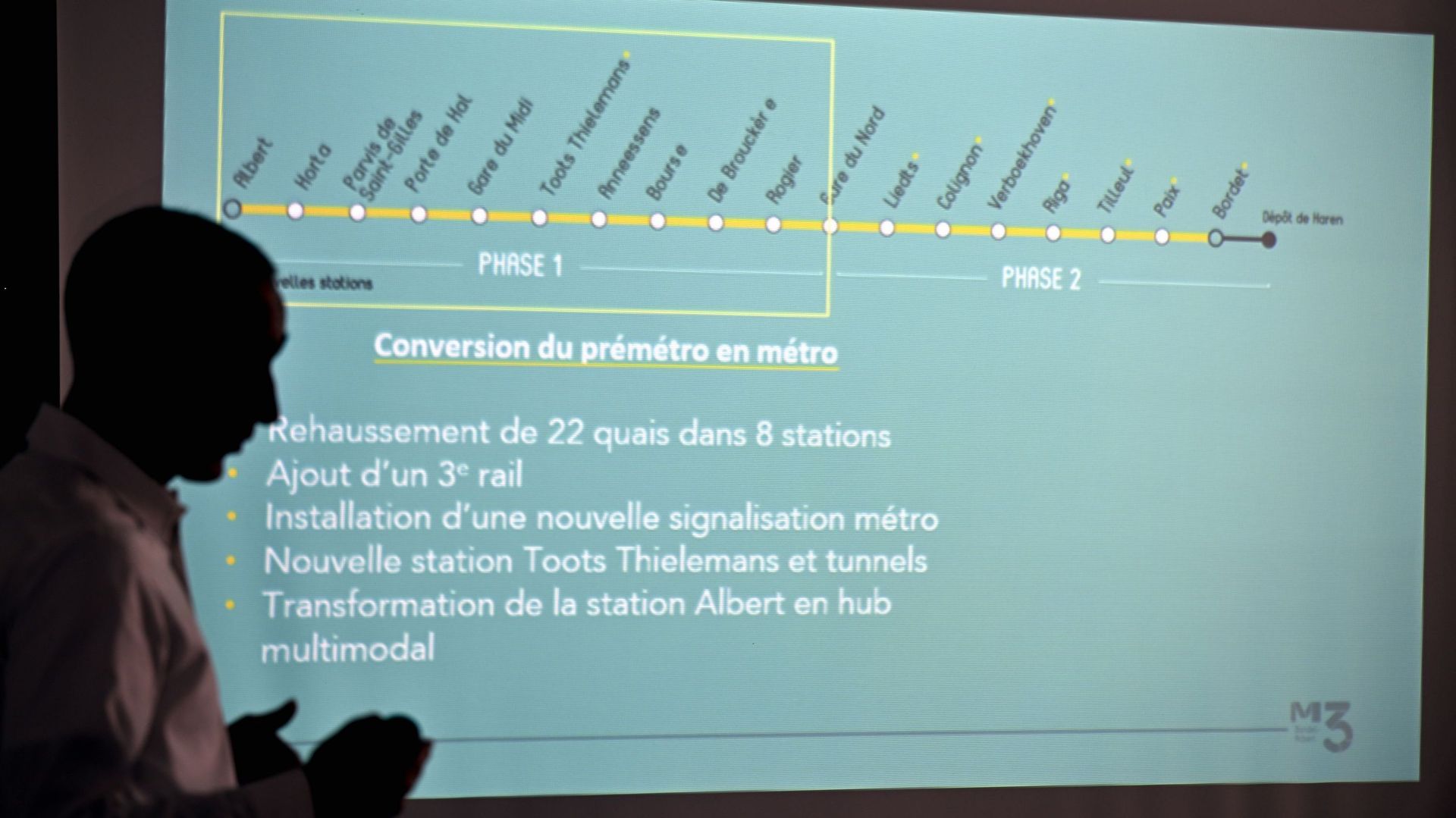
The Brussels Metro 3 project, intended to extend the metro lines northwards, is facing a critical juncture following a damning report by the Court of Auditors, revealing a ballooning budget and considerably delayed timelines. The report details several scenarios, each carrying substantial financial implications for the Brussels-Capital Region.
currently,full continuation of the project – encompassing both the North-Albert and Bordet-Nord sections – is estimated to cost 4.375 billion euros, with 3.829 billion euros still needing to be financed from 2026. Under this scenario, STIB (Brussels Intercommunal Transport Company) projects completion in 2034 for the North-Albert section and 2040 for Bordet-Nord, with temporary tram operation possible on the first section from 2031. STIB defends this as “the one that best meets mobility needs” in the long term for the capital.
Though, exploring option financing models reveals significantly higher costs. A Public Private Partnership (PPP) to finance the civil engineering of the Bordet-Nord section would escalate the total cost to 7.743 billion euros, requiring 7.198 billion euros in financing from 2026. This arrangement would lock the Brussels-Capital Region into payments extending until 2067 – over 40 years of debt – and delay full operationality of the line until 2042.
The Court of Auditors also examined scenarios involving scaling back the project. Abandoning the extension towards Evere, and finalizing only the North-Albert section, would cost 1.653 billion euros, with 1.108 billion needing to be financed. While saving investments already made on this section, the lack of a depot would severely limit line frequency, necessitating a thorough overhaul of the regional mobility plan. This option would also require 95 million euros in compensatory investments within the existing “tram master plan” to maintain surface tram services. adding a compensatory tram service on the bordet-North axis would increase the cost to 1.803 billion euros, an additional 150 million.
A ten-year suspension of the entire programme presents another costly alternative, estimated at 4.807 billion euros, including 200 million euros for pausing and resuming work. This would push completion dates to 2042 for North-Albert and 2048 for Bordet-Nord – nearly 30 years after the initial 2020 deadline. Under this scenario, no tram solution would be viable on the Nord-Albert section with unchanged infrastructure during the break. Adding a tram service to Bordet-Nord would reduce the deadlines to 2039 and 2046 respectively, at a total cost of 4.957 billion euros.
Further variations on the suspension scenario include pausing Nord-Albert while permanently abandoning Bordet-nord, costing 1.967 billion euros (including 180 million in shutdown and restart costs), and delaying North-Albert completion to 2042. Adding a tram service on the abandoned axis would raise the cost to 2.117 billion euros, without altering the completion date.
The most drastic option – entirely abandoning the Metro 3 project – carries a minimum cost of 1.002 billion euros, broken down as 223 million in abandonment costs, 546 million in lost investments, and 233 million in tram compensation. This would necessitate a complete review of the regional mobility plan. A compensatory tram service on Bordet-Nord would add a further 150 million euros to this abandonment bill.
The report underscores that irrespective of the path chosen, the Brussels-Capital Region faces substantial financial burdens. The document concludes with a call for a “deep questioning of all the actors in this matter,” highlighting the critical need for accountability and a reassessment of the project’s future.
