
Massive Wave Discovered Rippling Through the Gaia/Gaia_discovers_our_galaxy_s_great_wave” title=”… – … discovers our …’s great …”>Milky Way
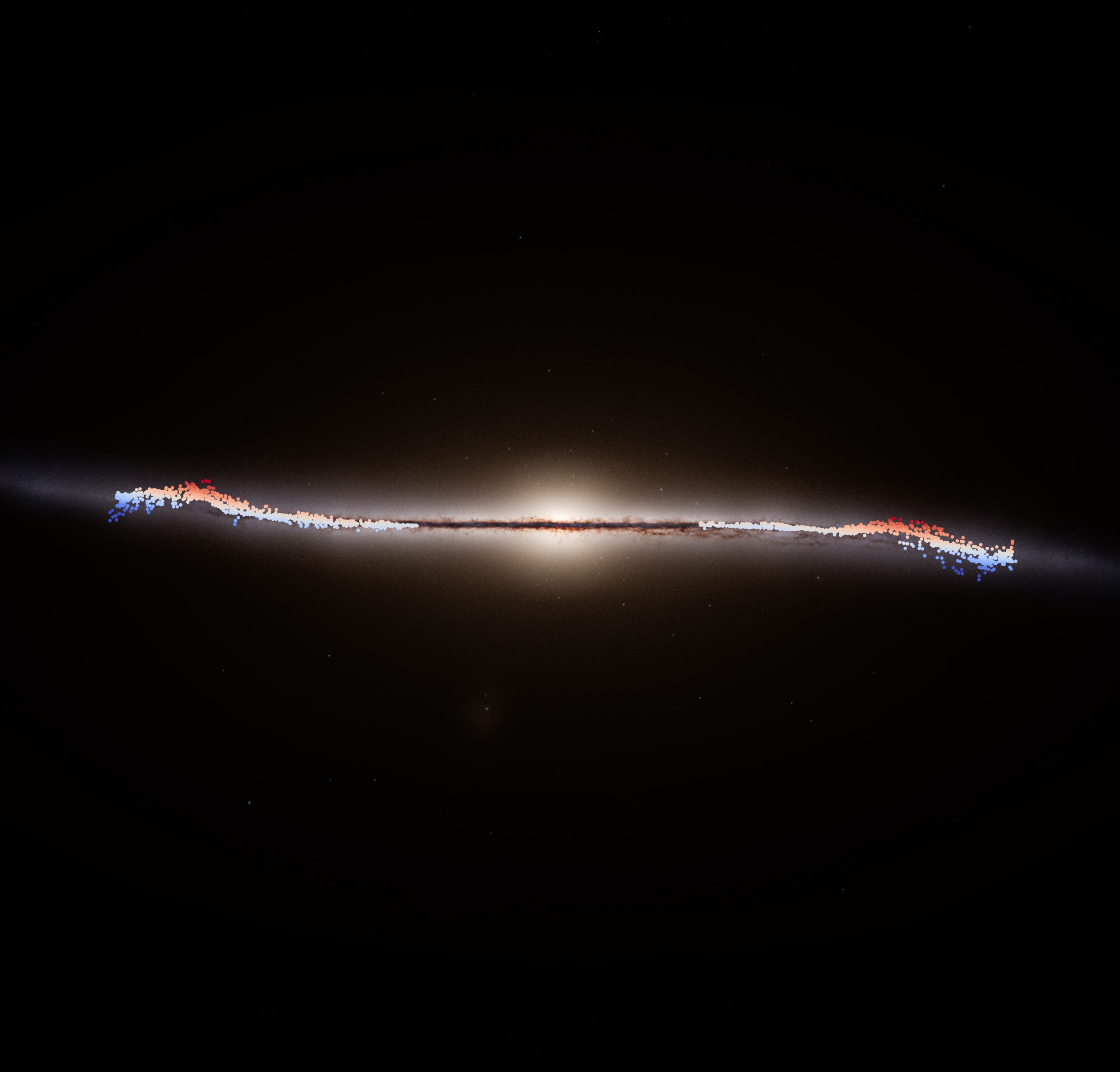
ESA, July 24, 2025 – astronomers have detected a colossal wave propagating through the Milky Way’s galactic disk, stretching tens of thousands of light-years. The finding, made using data from the European Space Agency’s (ESA) Gaia mission, offers a new window into the dynamic history of our galaxy.
The wave is characterized by a subtle, repeating pattern in the motions of stars and gas. Researchers identified the ripple by analyzing the precise positions and movements of millions of stars, utilizing “beacons” like young giant stars and Cepheid variable stars – stars whose regular brightness fluctuations allow for accurate distance measurements.
“Waves like this are fossils of past events,” explains the research team. Pinpointing the wave’s shape and speed could reveal when the galactic disk was disturbed, its stiffness, and the influence of both visible and dark matter on the outer galaxy.
the origin of the wave remains unknown. Scientists hypothesize a collision or close encounter with a dwarf galaxy in the Milky Way’s distant past could have triggered the disturbance. The Milky Way has a history of such galactic interactions. A potential connection to the Radcliffe Wave, a smaller filament of gas and young stars closer to our Sun, is also being investigated, though researchers note the two structures may not be related.
“The Radcliffe Wave is a much smaller filament, and located in a different portion of the galaxy’s disk compared to the wave studied in our work (much closer to the Sun than the great wave),” said researcher E.Poggio. “That’s why we would like to do more research.”
Future data releases from Gaia, including the upcoming fourth release, promise even more detailed measurements of stellar positions and motions, especially for variable stars like Cepheids. Johannes Sahlmann, ESA’s Gaia project scientist, stated this will “help scientists to make even better maps, and thereby advance our understanding of these characteristic features in our home galaxy.”
The findings are published in Astronomy & Astrophysics.
