
Young Students Already Targeted by Cybercrime, National Education launches Awareness Campaign
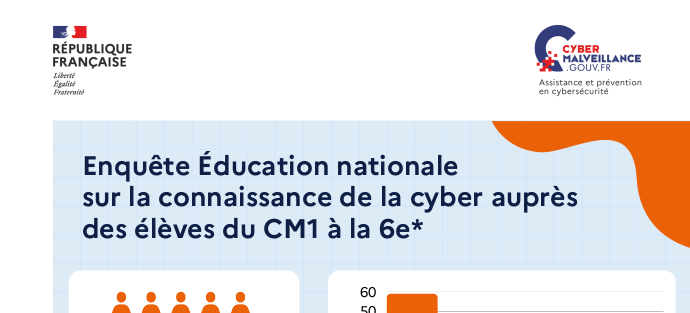
PARIS – A new survey reveals alarming rates of cybercrime victimization among French students aged 9-12, prompting the Ministry of National Education to launch a targeted cybersecurity awareness initiative. The study, conducted by Cybermalveillance.gouv.fr and the Ministry between September 1-23, 2025, with 4,264 students in CM1, CM2, and 6ème across ten Territoires numériques Éducatifs (TNE) departments, found that 7 out of 10 students have been informed about cybersecurity, yet over 31% have already been victims of online fraud via email or SMS.
The findings indicate that while awareness is growing, practical experience with cyber threats is unluckily common. Cyberbullying affects 15.7% of respondents, followed by account hacking (14.8%), viruses (14.2%), data leaks (12.7%),and false technical support scams (10.7%). Interestingly,”hacking” was identified as the most familiar threat by 1 in 4 students,surpassing awareness of more commonly discussed issues like spam,viruses,and phishing.
The primary source of cybersecurity data for these young people is their families, with nearly 6 in 10 students citing loved ones as their main source of awareness. Schools and colleges account for awareness in roughly 1 out of 3 students (31.6%).
In response, National Education will roll out a series of actions specifically aimed at 9-12 year olds (Cycle 3), coinciding with their first independent uses of digital tools. These include distributing campaign visuals and the booklet “Digital, don’t panic,” developed by Bayard Média Growth, during the “Cyber Friend” event. Supporting materials will also be provided to teachers to facilitate educational projects on cybersecurity throughout the school year, with student work to be recognized regionally.
“By registering in educational programs, the objective of this initiative is to respond to the early use of digital technology among young people and to initiate a maximum of students in cybersecurity in a sustainable manner by allowing them to adopt the right reflexes in the context of education in reasoned and safe uses of digital,” a statement from the Ministry indicated.
The survey builds on broader research conducted by Ipsos.Digital for Cybermalveillance.gouv.fr between May 16-26, 2025, surveying 2,000 French adults aged 18-75.
