
Breaking: U.S. Sees Declines in Major Sexually Transmitted Infections – But Concerns Remain
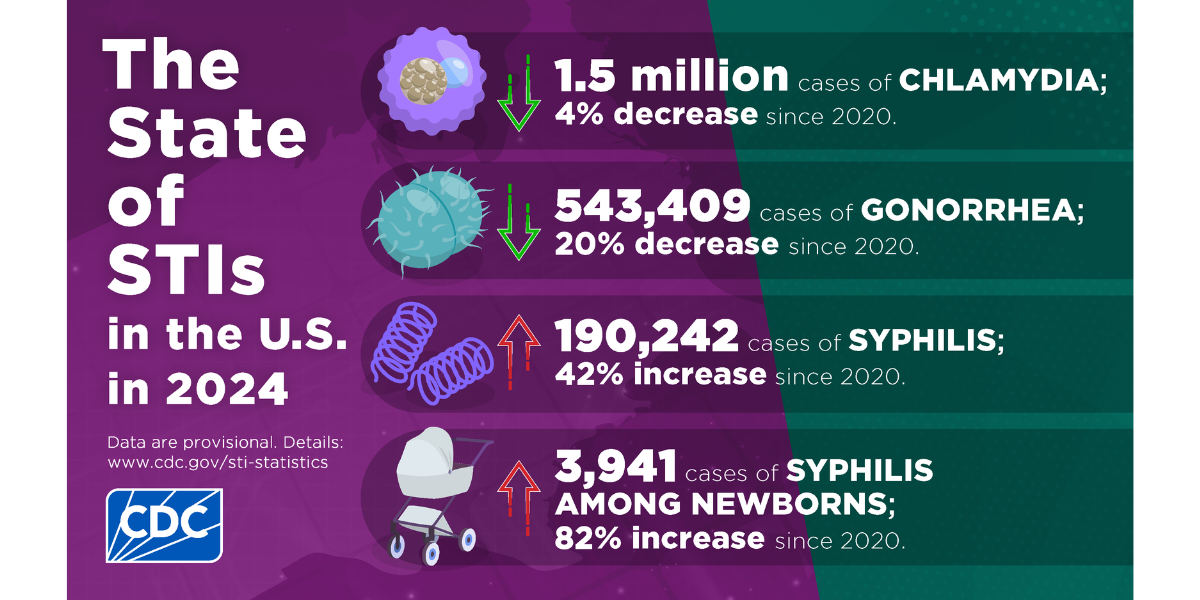
washington D.C. – In a positive development for public health, the Centers for Disease Control and Prevention (CDC) today released provisional surveillance data showing declines in cases of chlamydia, gonorrhea, and syphilis across the United States in 2024. This marks the third consecutive year of decline for gonorrhea and the second for both chlamydia and syphilis.
The CDC reports a combined 9% decrease in cases of chlamydia, gonorrhea, and syphilis compared to 2023. Specifically, chlamydia cases are down 8% since last year, while gonorrhea cases decreased by 10%.The most significant drop was observed in primary and secondary syphilis, with a 22% reduction from 2023.
despite this encouraging trend, the CDC data reveals a considerable overall burden of STIs. A total of 2.2 million cases where reported in 2024 - a figure 13% higher than a decade ago.
Though, a critical public health concern remains: congenital syphilis. While the rate of increase slowed, cases continue to climb. In 2024, 4,000 cases of congenital syphilis – infection passed from mother to child during pregnancy or birth - were reported, a 1.6% increase from 2023. This represents the 12th consecutive year of increases, with cases now 700% higher than in 2014. Congenital syphilis can lead to miscarriage, stillbirth, infant death, and lifelong health problems for affected babies, but is preventable through prenatal screening and treatment.
The CDC attributes the recent declines in overall STI rates to increased screening efforts and the implementation of new prevention methods, such as doxycycline post-exposure prophylaxis (doxy PEP).
It’s important to note that the data released today is provisional national data only. The CDC is currently updating its surveillance system, which has caused delays in data collection and analysis. State-level data and demographic breakdowns are not yet available and are expected in 2026, when the full results are published.
The CDC believes the current data will be valuable in guiding ongoing STI prevention strategies at the national, state, and local levels. The agency cautions that the provisional numbers may be subject to slight revisions upon the release of the complete data set in 2026.
