
## Europe’s Reusable Rocket Program Gains Momentum wiht themis Prototype
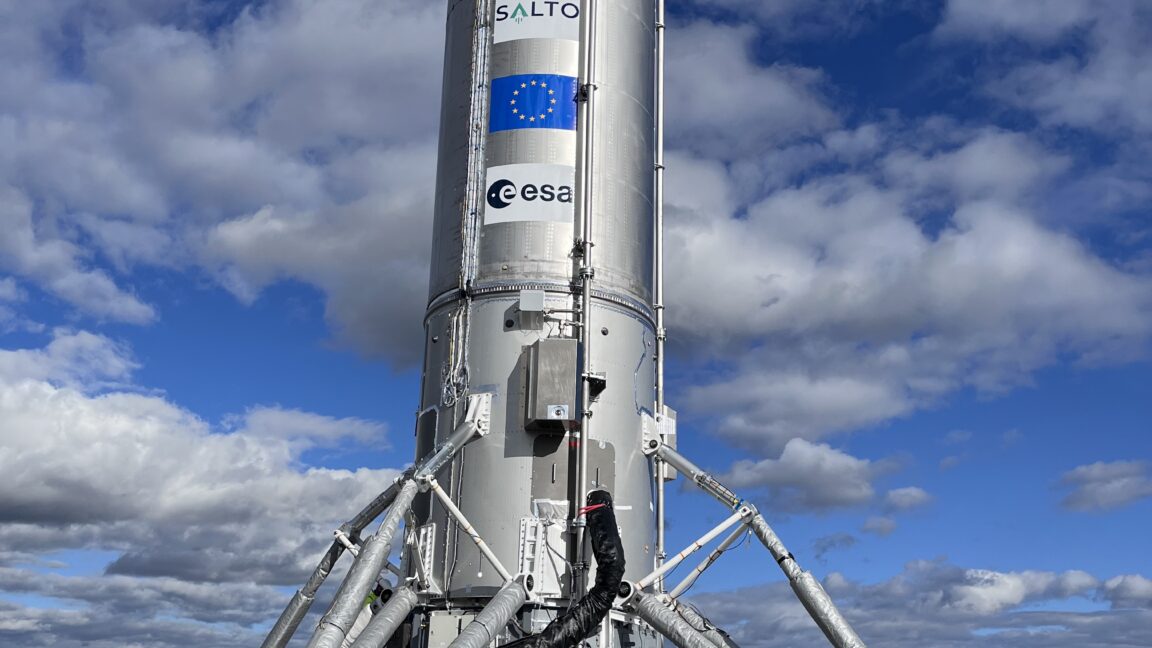
After a decade of lagging behind the United States in reusable rocket technology, Europe is demonstrating renewed progress. This week, ArianeGroup, a France-based aerospace company, announced the triumphant integration of Themis, a prototype designed to test reusable landing technologies, onto a launch pad in Sweden.
The integration marks the start of “combined tests,” where the connections between themis and the launch pad’s mechanical,electrical,and fluid systems will be rigorously evaluated. ArianeGroup aims to conduct a test under cryogenic conditions. Low-altitude hop tests, crucial for developing a first stage capable of vertical landing after an orbital launch, are anticipated to begin in late 2023 or early 2024.
“This milestone marks the beginning of the ‘combined tests,’ during which the interface between themis and the launch pad’s mechanical, electrical, and fluid systems will be thoroughly trialed, with the aim of completing a test under cryogenic conditions,” the company stated.
The Themis program represents a notable step for Europe, which initially responded slowly to the emergence of reusable rockets. While SpaceX successfully landed its first orbital rocket in December 2015, following blue Origin’s suborbital landing of New Shepard weeks earlier, the European Space Agency (ESA) had already committed to the Ariane 6, a new medium-lift rocket with a traditional, non-reusable design. The majority of ESA’s funding at that time was directed towards the Ariane 6’s development.
However, beginning in mid-2017, ESA initiated programs that would eventually contribute to a reusable launch vehicle, signaling a shift in focus.
