
Black Hole in Early Universe Growing at Unexpected Rate, International Team Finds
An international team of astronomers, including researchers from Portugal, has detected a black hole in the early universe growing at a rate 2.4 times faster than previously thought possible. The finding sheds light on the surprisingly active and complex conditions of the universeS infancy.
The black hole resides within Quasar Racs J0320-35, the incredibly luminous core of a distant and active galaxy located approximately 12.8 billion light-years from Earth. This distance means astronomers are observing the quasar – and its central black hole – as it existed just 920 million years after the Big Bang.
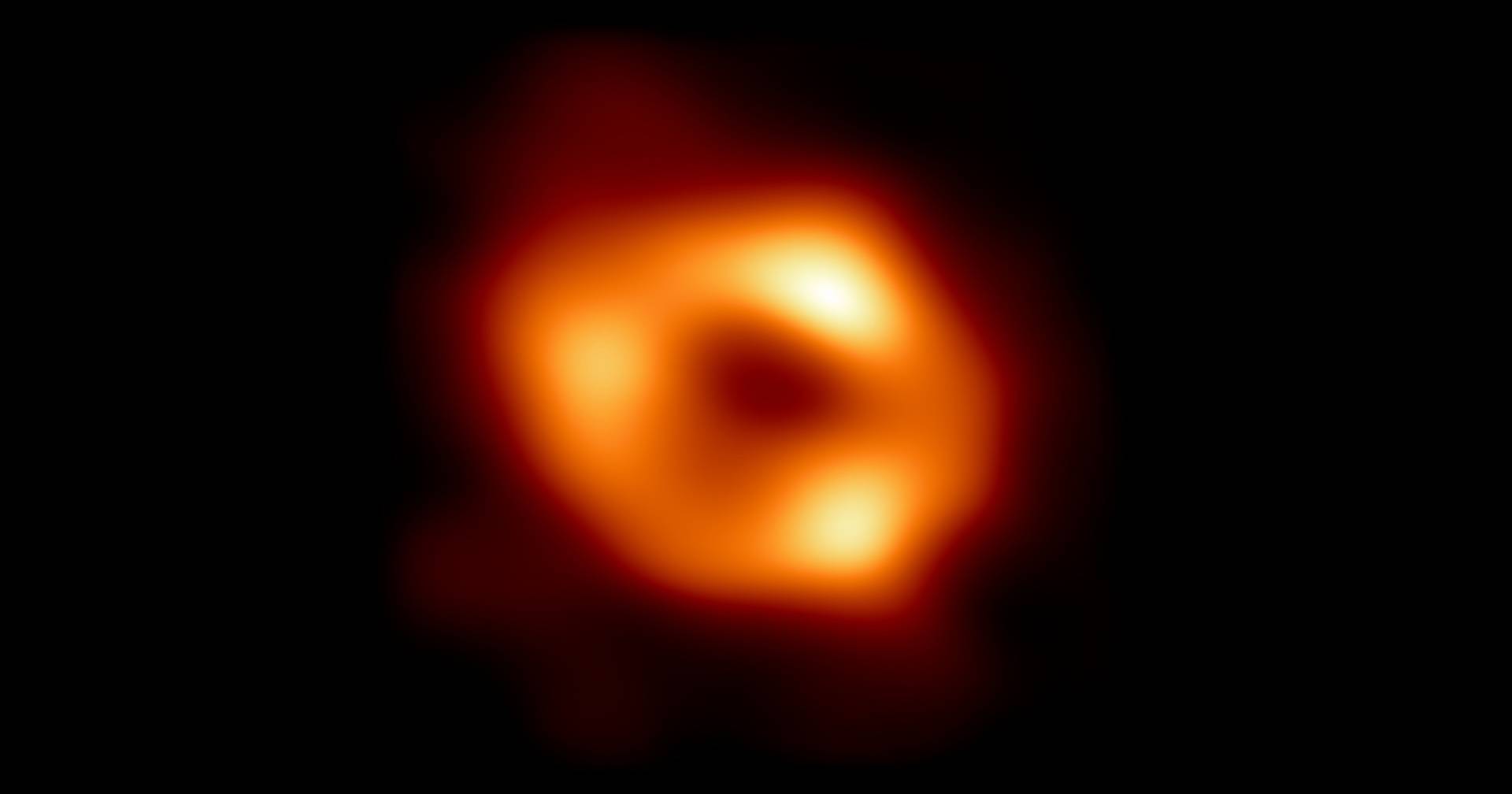
Supermassive black holes like this one typically have a mass around a thousand million times that of our Sun. They are detected not by directly observing the black hole itself (as nothing, not even light, can escape its gravity), but by the intense energy emitted from the material swirling around it. This material heats up as it orbits, releasing X-rays and visible light.
Researchers determined the black hole’s growth rate – estimated between 300 and 3000 solar masses per year – by comparing computational models with X-ray observations from the Chandra space telescope. They found the observed spectrum closely matched models predicting growth exceeding the eddington limit, a theoretical maximum for how quickly a black hole can accrete matter.
“The first billion years of the universe are increasingly enigmatic,” stated José Afonso, a co-author of the study and chair of the Portuguese Astronomy Society, from the Institute of Astrophysics and Space Sciences. “Not only are we discovering these gigantic black holes, previously considered unfeasible, but we’re also realizing they possessed extreme properties.” He added that the early universe, during the formation of the first stars and galaxies, was far more dynamic than previously understood.
Three researchers from the Institute of Astrophysics and Space Sciences contributed to the study, highlighting Portugal’s role in unraveling the mysteries of the cosmos.
