
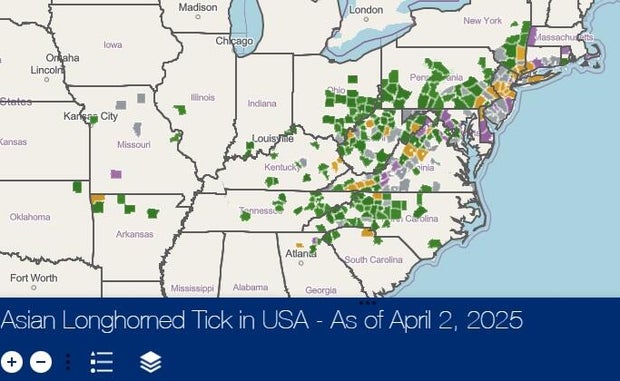
Asian Longhorned Tick Expands U.S.Presence, raising Concerns for Animals and Potential Human Health risks
An invasive tick species, the asian longhorned tick, has been detected in a new location within the United States, prompting alerts from agricultural and public health officials.The tick, first identified in the U.S. in 2017, poses a threat to livestock, pets, and possibly humans due to its ability to transmit diseases and reproduce rapidly.
The recent discovery expands the tick’s known range, increasing the potential for wider spread and impact.While no U.S. cases of diseases carried by the tick – including Rocky Mountain spotted fever, heartland virus, and Powassan virus – have been confirmed outside of laboratory settings, the potential for transmission remains a concern.The Michigan Department of Agriculture and Rural Growth (MDARD) is actively monitoring the situation and providing guidance to residents.
Unlike manny other tick species, the Asian longhorned tick doesn’t require a male to reproduce. A single female can lay between 1,000 and 2,000 eggs, leading to potentially massive infestations on animals. According to the U.S. department of Agriculture (USDA),these large infestations can cause significant stress,reduced growth and production,and even death from excessive blood loss in livestock and pets.
Officials recommend several preventative measures. people should check their bodies and clothing for ticks after spending time outdoors, and remove any found instantly. the Centers for Disease Control and Prevention (CDC) advises treating clothing and gear with permethrin (0.5%) and using EPA-registered insect repellants. Maintaining clear yards and pastures, with borders of gravel or mulch, can also reduce tick habitats.Pet and livestock owners should utilize regular tick treatments and consult with veterinarians about preventative options. Consistent monitoring of animals for ticks is also crucial. more data can be found on the MDARD website (https://www.michigan.gov/mdard/animals/diseases/asian-longhorned-tick) and the USDA (https://www.aphis.usda.gov/sites/default/files/fs-longhorned-tick.pdf). The CDC also offers guidance on tick prevention (https://www.cdc.gov/ticks/prevention/index.html).
