
2,200-Year-Old Roman Helmet Unearthed from Decisive Naval Battle
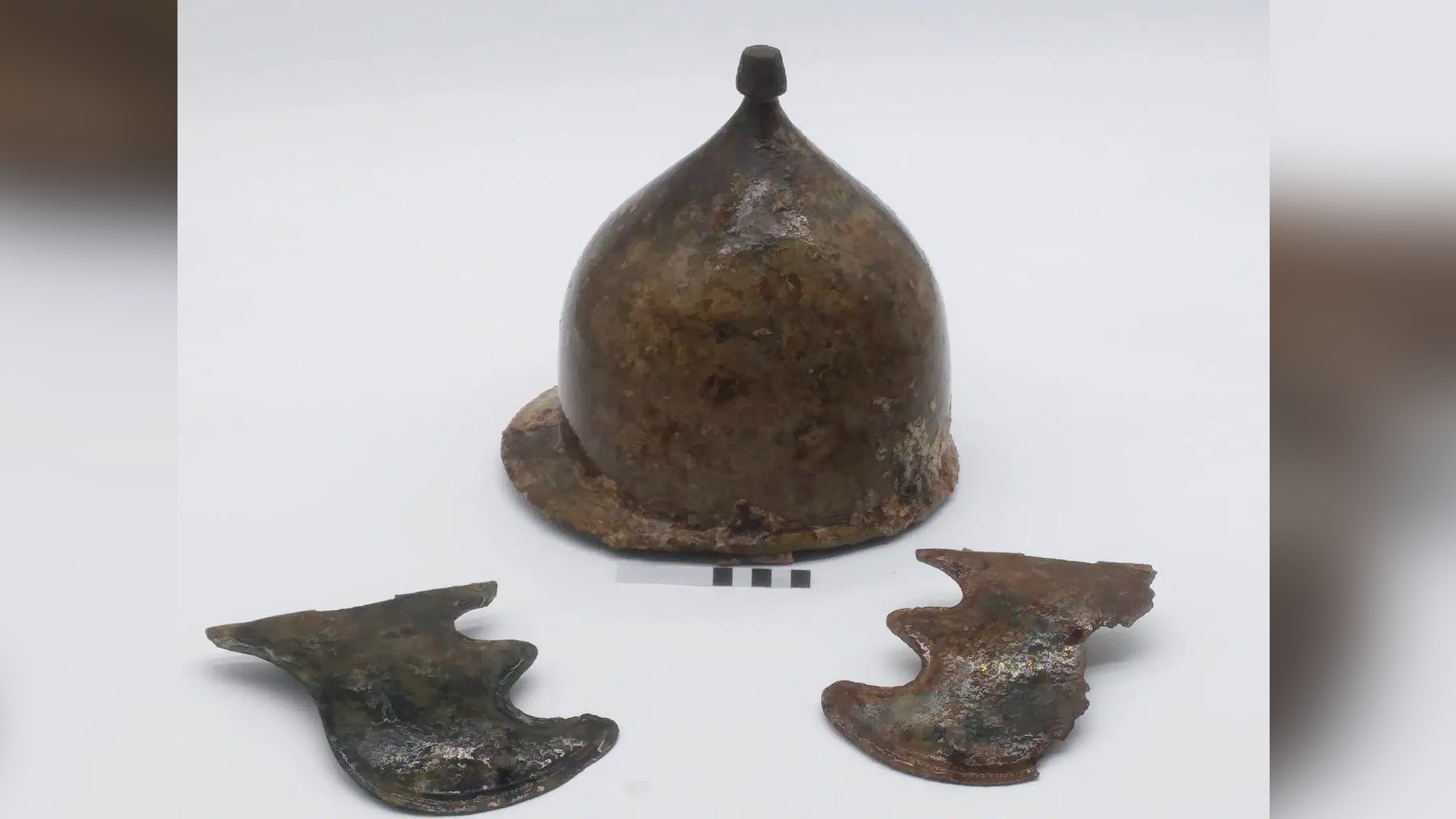
Mediterranean Sea – A remarkably well-preserved Roman helmet, dating back 2,200 years, has been recovered from the site of the Battle of the Aegates Islands, a pivotal naval clash that ended the First Punic War in 241 B.C. The discovery offers a rare glimpse into the equipment of Roman soldiers and provides further insight into the dramatic events of the battle fought off the coast of Sicily.
The helmet, identified as a montefortino type – the most common helmet of the era – was found alongside other artifacts recovered using CT scans, including swords, spears, and a naval battering ram. A newly discovered inscription on the ram links it to Gaius Sulpicius Gallus, a Roman magistrate who served during the First Punic War. The find bolsters evidence suggesting a Roman ship was captured by the Carthaginians during the battle, with heavy equipment potentially jettisoned overboard in an attempt to escape.
The Battle of the Aegates Islands was a decisive Roman victory, securing their control of the seas and ultimately leading to Carthage‘s surrender. Prior discoveries at the site include other Montefortino helmets and naval rams, hinting at the scale of the conflict and the losses suffered by both sides. Archaeologist William Murray explained in 2019 to Live Science that Carthaginian soldiers may have discarded equipment to lighten their ship, or that mercenaries from gaul and iberia, known to wear similar helmets, were present.
“This was the most common type of helmet at that time,” said Jeffrey Royal, an independent archaeologist, in an email to Live Science. “The great thing about this one is it truly seems the cheek pieces were found with it; most of ours were scattered.” The intact cheek pieces are particularly significant, offering researchers a more complete understanding of the helmet’s original construction and design.
The recovered artifacts are currently undergoing further study and conservation,promising to reveal even more details about the lives of the soldiers who fought in this ancient war and the technology of naval warfare in the 3rd century B.C.
