
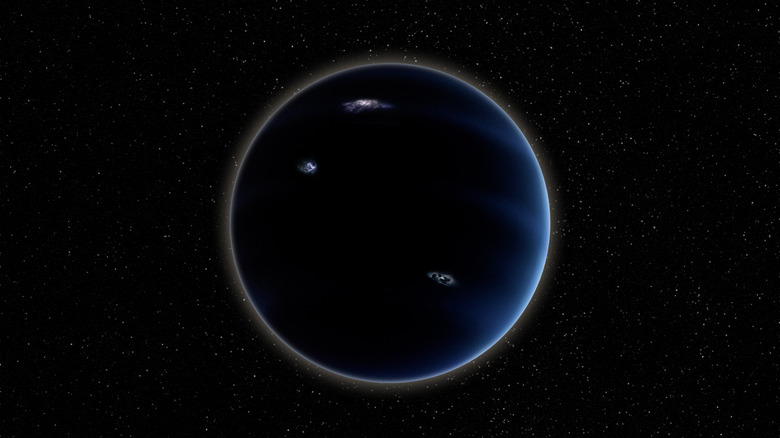
Astronomers Continue Debate Over Potential Ninth Planet in Solar System
PASADENA, CA – The existence of a ninth planet lurking in the outer reaches of our solar system remains one of astronomy’s most hotly debated topics, despite decades of searching. Initial research suggesting its presence, sparked by the work of Konstantin Batygin and Mike Brown, continues to fuel investigation, though skepticism persists within the scientific community. The potential revelation woudl redefine our understanding of the solar system’s formation and evolution, impacting planetary science for generations to come.
The ongoing search for “Planet Nine” stems from observed irregularities in the orbits of certain trans-Neptunian objects – celestial bodies orbiting the sun beyond Neptune. Batygin and Brown’s 2016 study proposed a massive planet, estimated to be five to ten times the mass of Earth, could be gravitationally influencing these objects. While subsequent research has bolstered the possibility – with one recent study suggesting a 40% chance of its existence – othre findings have cast doubt on the theory, highlighting the challenges of confirming such a distant and elusive world.
The idea of a planet beyond Neptune isn’t new.Before Pluto’s discovery, scientists puzzled over anomalies in Uranus’s orbit, initially attributing them to the gravitational pull of an unknown planet. These anomalies were later explained by measurement errors, creating a cautious approach to claims of undiscovered planets.Recent discoveries, such as the trans-Neptunian object Ammonite, present challenges to the Planet Nine hypothesis. Ammonite’s orbital behavior appears inconsistent with the gravitational influence a ninth planet would exert. Further complicating the search, other objects within the Kuiper Belt also exhibit orbital patterns that don’t align with the Planet Nine theory.
Direct observation remains the ultimate goal,but presents significant hurdles. Even with advanced technology, reaching Planet Nine’s theorized orbit with a space probe would take over a century. Furthermore, the planet’s extremely long orbital period – potentially thousands of years – makes predicting its location a daunting task. The debate is expected to continue as astronomers gather more data and refine their models, with the possibility of a definitive answer remaining distant.
