
Australian Radio Telescope Undergoes Major Upgrade, Boosting Hunt for Early Universe signals
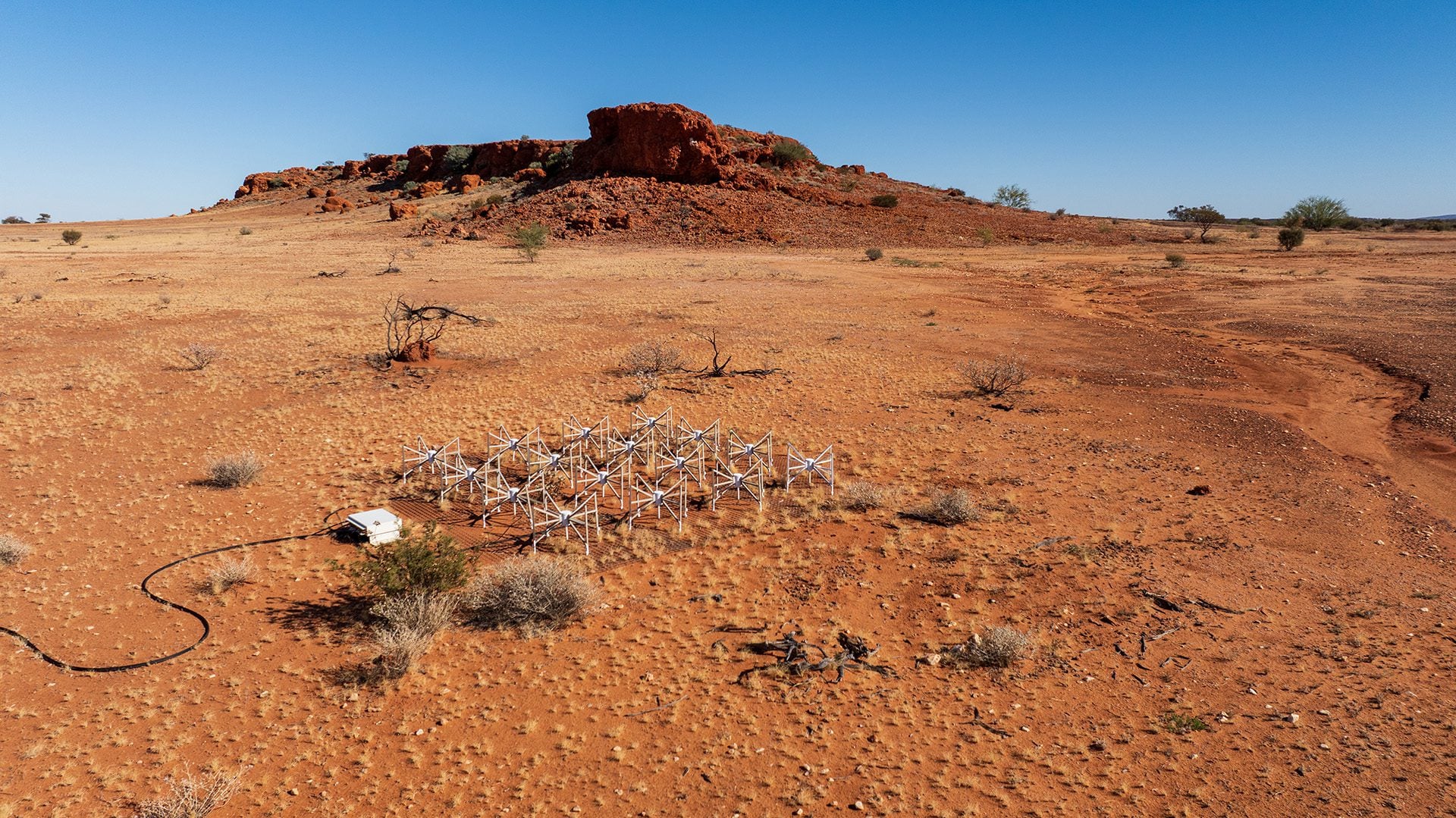
WESTERN AUSTRALIA – The Murchison Widefield Array (MWA), a radio telescope located in the remote Western Australian outback, has completed a $5.4 million upgrade substantially expanding its capabilities. The project doubled the number of antennas to 8,192, effectively doubling the telescope’s raw collection power and increasing its footprint to 30 square kilometers.
The upgrade also included a new ”correlator”-a supercomputer that combines signals from the antennas-named MWAX.This, combined with the increased antenna count, quadrupled the telescope’s data output. Engineers anticipate the improvements will provide more detailed insights into several areas of astronomical research.
A primary focus of the upgraded MWA will be the Epoch of Reionization, a period in the early universe dominated by neutral hydrogen. Researchers also hope to gain further understanding of transient radio sources and heliophysics. One particular mystery the telescope aims to address is the origin of Odd Radio Circles (ORCs), faint and previously unseen radio sources potentially energized by nearby galaxies.The MWA’s enhanced capabilities are also serving as a proving ground for the future Square Kilometre array (SKA). The SKA-Low, to be hosted in Western Australia, will eventually feature 131,000 dipole antennas, far exceeding the MWA’s current array. While the SKA isn’t expected to be completed for another four years, the MWA remains the leading radio telescope in the region, poised to deliver new discoveries in the interim.
More data can be found at: Curtin University.
