
Czech Support Lost in WordStar Transition: A CP/M mystery on the ZX Spectrum
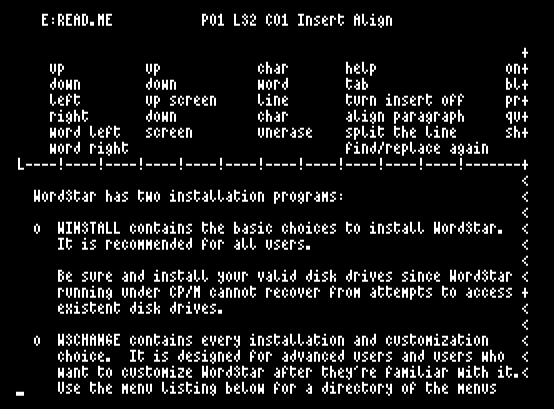
A curious anomaly has surfaced in the history of word processing: despite earlier Czech language support, WordStar 4.0 – released in 1987 – dropped compatibility with 8-bit character encoding crucial for Czech users on CP/M systems like the ZX Spectrum. This regression occurred despite the version being based on a considerably enhanced codebase.
MicroPro WordStar 3.30, evidenced by serial number YK8043TT/Cs 1.2 and copyrighted 1983 (with copyright notices persisting to 1989), successfully handled Czech characters. However, WordStar 4.0 represents a pivotal, and problematic, shift. it wasn’t a straightforward evolution of the original code, but a rebranding of “NewWord,” an editor created by former MicroPro employees. NewWord, initially a faithful WordStar clone, quickly surpassed its predecessor in features, a gap MicroPro struggled to bridge. Ultimately, MicroPro acquired NewWord and released it as WordStar 4.0, but the integration came at a cost – the loss of native 8-bit coding support.
The core issue lies in the transition to NewWord’s architecture. While seemingly designed to accommodate 8-bit coding without major difficulty-as documented in a retro-computing treatment found on retroarchive.org-the support was absent in the initial release. This impacted Czech users on platforms like the ZX Spectrum running CP/M, who relied on 8-bit encoding for their language.
The situation has sparked discussion among retro-computing enthusiasts on platforms like oldcomp.cz, seeking insights and potential solutions to restore Czech language functionality to WordStar 4.0.The story highlights the complexities of software evolution, acquisitions, and the often-unforeseen consequences for specific user groups and legacy systems.
