
The Weight of Silence: Lessons from Georgian Courage
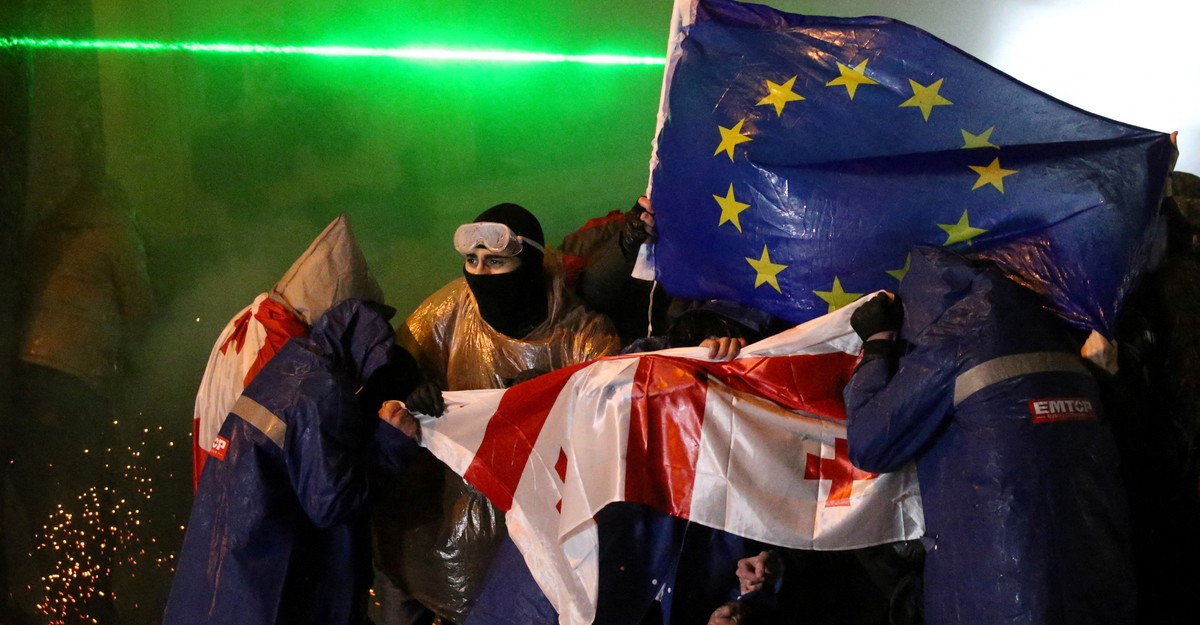
Visiting Georgia left an indelible mark,not through grand pronouncements,but through the quiet,persistent bravery woven into the fabric of daily life. I witnessed a nation accustomed to defending its values not with the assumption of guaranteed rights, but with the understanding that those rights must be actively, constantly reaffirmed. Protests aren’t seen as temporary responses to crises, but as a essential expression of identity – a way to remind oneself, and the world, of what one believes in, even in the face of potential violence. The simple act of marking a building with the Georgian flag alongside the EU flag felt less like vandalism and more like a fervent prayer for the future.
Returning to the united States, a democracy over two centuries old, I was struck by a disquieting contrast. My own response to recent political shifts felt…soft. Accustomed to a system where rights felt established,I found myself navigating a path of cautious accommodation,hoping to preserve a semblance of the country I knew by avoiding confrontation. This manifested in subtle,yet telling ways.
As a writer, I began to self-censor. A federal grant request saw a project subtly reshaped to emphasize patriotism. Words like “diversity” and specific ethnic identifiers, such as “Nigerian-American,” were removed from other proposals. Even personal expression felt fraught with risk; on a flight home, I purged political content from my Instagram, fearing scrutiny from airport security. The thought of writing this essay itself initially sparked hesitation, a fear for the safety of naturalized family members.
These actions, born of a desire to avoid trouble, felt deeply unsettling. They highlighted a stark difference between the American experience and the Georgian one. In Georgia, the willingness to endure hardship for principle is a given. Here, it felt like a choice I was actively avoiding. The recent, alarming case of a law-abiding mother deported by ICE forced a reckoning. When do I choose to risk discomfort, even potential repercussions, to stand up for what I believe in? When does the erosion of fundamental freedoms become a line I refuse to let cross?
The answer, I realized, isn’t waiting for a dramatic escalation – for federal agents on our streets or neighbors disappearing. It’s about recognizing that the cost of silence is far greater than the potential consequences of speaking out. The Georgians I met demonstrated this powerfully. They face an uncertain future, but they face it with courage, understanding that a collective voice, even a vulnerable one, is the most potent defense against tyranny.Celebrating the release of my novel, inspired by my time in Georgia, at a Philadelphia restaurant named “Megobari” – Georgian for “friend” – I raised a glass to the book, and more importantly, to the people who taught me its most valuable lesson. They showed me that true freedom isn’t simply having rights,but defending them,even when the outcome is uncertain. It’s a lesson I intend to carry forward, and one I believe is vital for all who cherish democracy.
