
Scientists Achieve Glow-in-the-Dark Succulents & Unlock Clues to Snail Vision and Regeneration
Researchers are illuminating the future with both glowing plants and breakthroughs in understanding animal vision, offering potential advancements in sustainable lighting and regenerative medicine. A flurry of recent studies, published in journals like Nature Communications and Matter, details innovative approaches to bioluminescence and genetic research with surprising results – from snails that may “see” to succulents that literally glow.
These developments represent a convergence of cutting-edge techniques, including CRISPR gene editing and novel applications of phosphorescent materials. The work on snail vision could pave the way for understanding the mechanisms of eye regeneration, a field with important implications for treating vision loss in humans. Simultaneously, the creation of glowing succulents offers a potentially affordable alternative to genetically engineered bioluminescent plants, bringing sustainable lighting closer to reality.
Snail Eyesight Under the Microscope
Apple snails are revealing secrets about eye growth and regeneration thanks to the work of Dr. giulia Accorsi and her team. Utilizing CRISPR/Cas9 technology, researchers successfully deactivated the pax6 gene in snail embryos. This gene is already known to be crucial for brain and eye formation in a variety of species, including humans, mice, and fruit flies. The experiment confirmed pax6‘s role in snail eye development, as snails lacking functional copies of the gene did not develop eyes.
Accorsi’s team is now investigating weather pax6 also influences the snails’ remarkable ability to regenerate lost eyes, and identifying other genes involved in this process. This research,published in Nature Communications (DOI: 10.1038/s41467-025-61681-6), could provide valuable insights into the genetic basis of regeneration, potentially leading to new therapies for eye injuries and diseases. Interestingly,preliminary observations suggest snails can actually “see,” a finding that warrants further investigation.
A Cheaper glow: Phosphorescent Succulents
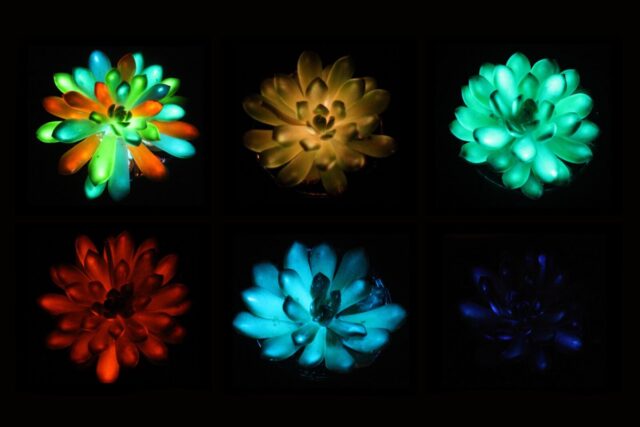
While Light Bio’s genetically modified Firefly Petunia marked a first step toward glowing plants, its limited brightness and high production costs presented challenges. Scientists at South China Agricultural University have bypassed genetic engineering altogether with a more accessible approach: injecting succulents with phosphorescent chemicals – the same materials used in commercial glow-in-the-dark products, known as “afterglow luminescence.”
The results, detailed in a paper published in the journal Matter (https://www.cell.com/matter/fulltext/S2590-2385(25)00413-8), demonstrate that succulents can be imbued with a vibrant, sustained glow in various colors. This method offers a potentially cost-effective pathway to creating self-illuminating plants for decorative and, eventually, sustainable lighting purposes.
