
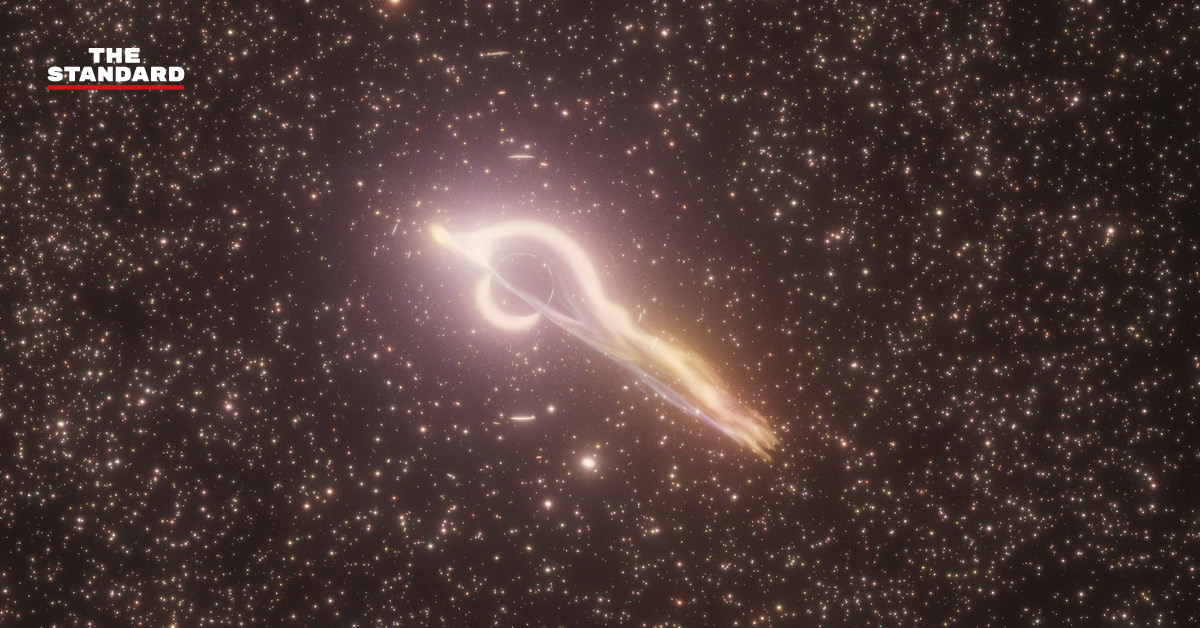
Astronomers anticipate a significant advancement in the detection of tidal disruption events (TDEs) thanks too the capabilities of the Vera C. Rubin Observatory. Previously, instruments like the XMM-Newton camera, while valuable for studying the universe in X-rays, had a limited field of view. This constraint meant that tdes occurring in other parts of the sky could be missed.
The Vera C.Rubin Observatory, situated in Chile, is designed to survey the sky nightly for over a decade. This thorough and continuous observation strategy is expected to greatly enhance the chances of discovering phenomena like intermediate-mass black holes, which are often associated with TDEs.
Details of such discoveries are slated for publication in *The Astrophysical Journal* on April 20, 2025.
Image: NASA, ESA, Ralf Crawford (STScI)
refer:
