
Detecting Mustard Gas: A Race Against Time
New Sensor Technology Offers Hope Against Devastating Chemical Warfare
Chemical warfare remains a terrifying reality, with toxic agents capable of inflicting widespread harm without direct combat. Mustard gas, a particularly insidious agent, causes severe cellular damage, leading to debilitating blisters, respiratory distress, and long-term health consequences including cancer. Its lingering threat necessitates advanced, accessible detection methods.
The Persistent Threat of Mustard Gas
Mustard gas, a liquid at room temperature that can vaporize into a toxic mist, has a history marked by devastating use, notably during World War I. Its insidious nature lies in its ability to penetrate tissues, damaging DNA and cellular structures, with effects that can manifest hours after exposure, complicating immediate treatment.
The long-term impact of mustard gas exposure is profound, extending to weakened immune systems and a significantly increased risk of various cancers. Furthermore, studies indicate that even a single exposure can have intergenerational effects, with reports of physical abnormalities in the offspring of exposed individuals and cases of infertility.
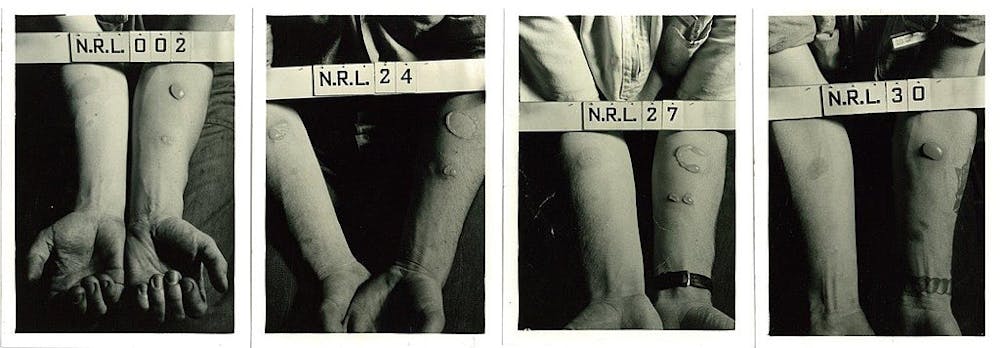
The debilitating effects of mustard gas, including large, fluid-filled blisters on the skin and severe eye irritation leading to potential blindness, underscore the critical need for early detection. Inhaling the agent causes burning of the airways, resulting in breathing difficulties and lasting lung damage.
Bridging the Detection Gap
Current methods for detecting mustard gas often rely on complex laboratory techniques requiring expensive and fragile instrumentation, rendering them impractical for field deployment. Researchers are actively exploring innovative solutions to overcome these limitations, aiming for devices that are rapid, portable, and reliable.
Previous attempts have included electrochemical biosensors, but enzyme degradation and environmental interference have hampered their effectiveness. Molecularly imprinted polymer test strips offer portability and ease of use but detect breakdown products rather than the agent itself. Fluorescent probes show promise, yet remain susceptible to environmental factors like humidity and temperature, impacting their reliability in challenging conditions.
The development of home-use chemical sensor devices and wearable technology represents a significant step forward. Integrating nanomaterials and artificial intelligence into these devices could enhance their sensitivity and speed of response. As of early 2024, research into AI-powered sensors for chemical detection continues to advance, with studies demonstrating improved data analysis in complex environments (Nature Scientific Reports, 2024).
Innovations in Field Detection
A team of chemists and materials science researchers, including Makenzie Walk and Joseph Ibukun from Washington University in St. Louis, and led by Jennifer Heemstra and M.G. Finn, are working to develop more effective detection methods. Their approach involves designing molecular sensors that react with chemical weapon simulants to produce a distinct fluorescent signal.
The team is meticulously identifying the optimal compounds for sensor reactions, aiming for a balance between sensitivity to detect minute quantities of mustard gas and specificity to minimize false positives. Understanding how chemical structures influence reactivity is crucial for developing detectors that can alert users to the presence of hazardous agents quickly and accurately.
Global Efforts and Future Preparedness
While the 1997 Chemical Weapons Convention aims to eliminate these horrific weapons, nations such as Egypt, North Korea, and South Sudan have not ratified the treaty, leaving a gap in global prohibition. The implementation of sanctions, as seen with U.S. measures against Sudan for its confirmed use of chemical weapons in 2024, serves as a deterrent.
Even in the absence of active deployment, residual traces of mustard gas can persist in the environment, posing an ongoing risk. Technologies capable of real-time identification of these chemical threats are vital for enhancing community preparedness and ensuring peace of mind. The ongoing scientific pursuit of reliable and accessible detection tools is a critical component of global safety and security.
