
TV Grapples with Robots’ Roles in Human Life
From helper bots to existential threats, new shows explore the complex relationship between humans and AI.
Science fiction television is increasingly exploring the awkward, potentially dangerous interactions between humans, robots, and AI. As technology rapidly advances, these shows hold a mirror to our own anxieties and questions about our future.
Androids with Identity Crises
The robots featured in modern television programs often grapple with identity issues, similar to those in earlier shows such as “Lost in Space” and “Battlestar Galactica.” These shows question how intelligent robots can coexist with humans, and often, the robots challenge the very premise of their existence.
In Apple TV+’s “Murderbot,” the titular character, played by Alexander Skarsgård, is a security unit that has hacked its governor module, gaining free will. However, it must conceal its true nature to avoid destruction, and would rather watch trashy TV than deal with the humans it is assigned to protect. The show was recently renewed for a second season.
Similarly, other series are engaging with difficult technological questions. Will AI take our jobs? How should we interact with delivery robots? Can self-driving cars truly be trusted?
Rise of the Machines?
Many shows explore the idea of AI-driven robots becoming self-aware and rebelling against their human creators. In AMC’s “Humans” and HBO’s “Westworld,” AI bots become self-actualized and fight for their freedom, challenging the notion that they should be subservient to humans. These narratives often suggest that robots may eventually realize they no longer need humans or even view humans as the villains.
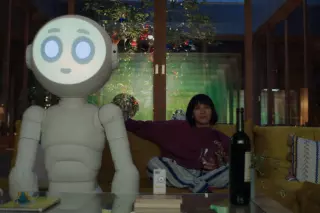
Meanwhile, in the real world, companies such as Tesla and Boston Dynamics are developing robots capable of performing human tasks. Amazon is rapidly increasing its use of robots in warehouses, with projections estimating that the company plans to deploy thousands more in the near future.
Navigating the AI Era
AI technologies are evolving rapidly, raising concerns about their potential impact on society. There are fears that AI tools like ChatGPT could make us passive thinkers. AI’s influence is expanding into various aspects of life, including employment, entertainment, and even relationships.
Earlier shows like “Next,” “Person of Interest,” and “Almost Human” explored the potential abuses of AI. More recently, HBO’s “Mountainhead,” directed by Jesse Armstrong, satirized the dangers of hastily deployed AI software.
Netflix’s “Black Mirror” has also delved into the implications of AI, with episodes featuring artificial bodies, AI dating apps, and algorithms that steal storylines from real life. Season 7 continued this exploration with stories about digital avatars and machine learning. One episode, “Eulogy,” stars Paul Giamatti as Phillip, who is forced to confront his past by an AI-powered avatar. Another episode, “Bête Noire,” features Rosy McEwen as a programmer who alters reality with quantum computing.
Ultimately, television shows are helping us grapple with the integration of AI into our lives, but whether these technologies will improve or destroy us remains unclear.
Should we trust the cute helper bots, or should we fear the advanced AI of “Black Mirror?” Perhaps the best approach is to leave the robots alone to watch their favorite shows in peace.
