
KOICA‘s AI challenge: Revolutionizing ODA with LLM and Chatbots in Southeast Asia
Table of Contents
- KOICA’s AI challenge: Revolutionizing ODA with LLM and Chatbots in Southeast Asia
- AI-Driven Solutions Take Center Stage
- Excellence Awards Highlight Diverse applications
- Prizes and Future Support
- KOICA’s Commitment to Innovation
- Award Winners
- The Growing role of AI in international Development
- Frequently Asked Questions about AI and ODA
- What is ODA?
- How is AI being used in ODA projects?
- What are the benefits of using LLM in ODA planning?
- What is the role of chatbots in international development?
- How can organizations get involved in KOICA’s AI initiatives?
- What are the ethical considerations of using AI in ODA?
- How does KOICA ensure the sustainability of AI-driven ODA projects?
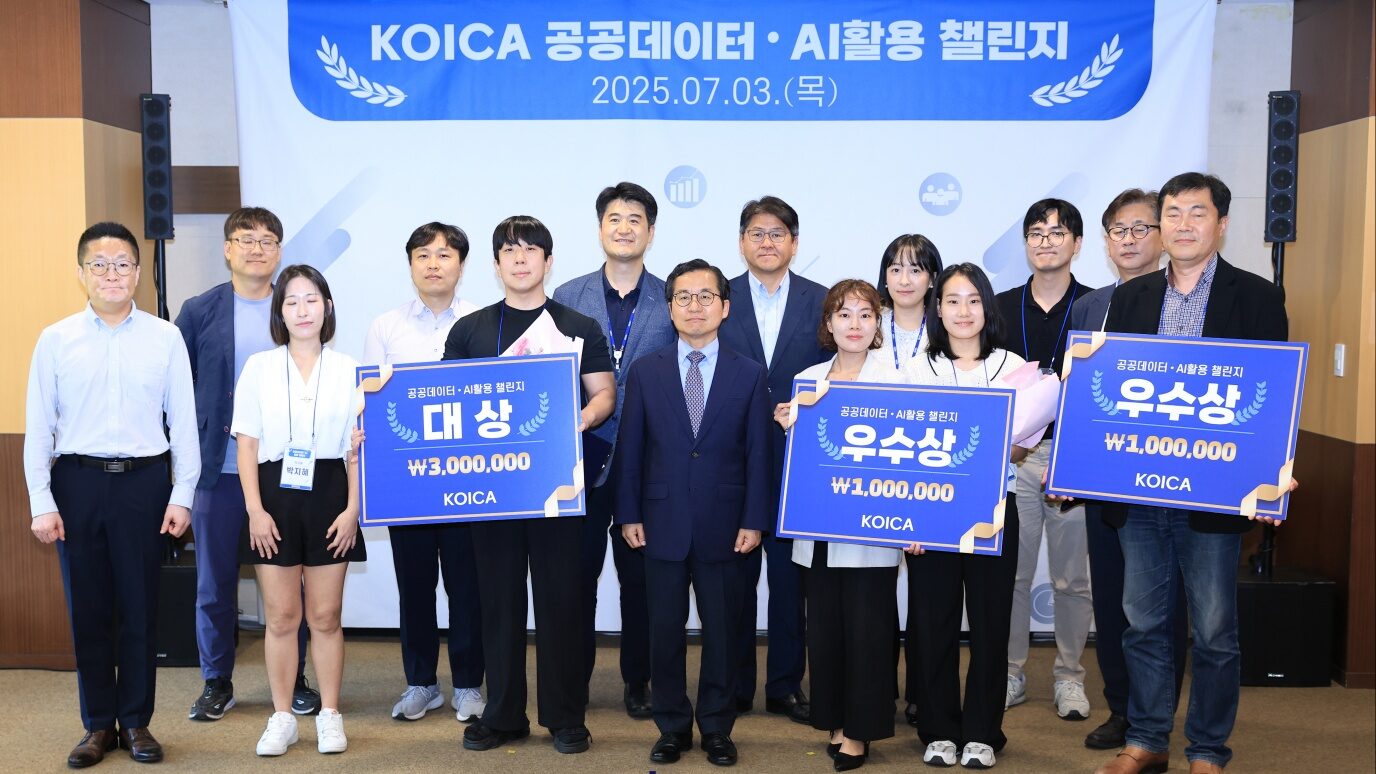
The Korea International Cooperation Agency (KOICA) concluded its 2025 public Data and AI Utilization Challenge, recognizing groundbreaking ideas leveraging artificial intelligence (AI) to enhance Official Development Assistance (ODA). The competition, designed to foster digital service innovation within the ODA sector, culminated in an awards ceremony held on July 3rd in Seongnam, South Korea.
AI-Driven Solutions Take Center Stage
Out of 23 participating teams, five finalists presented their solutions after undergoing rigorous training and personalized mentoring.The grand prize was awarded to the Green Girin Team for their ‘ODA Quest‘ platform, a custom solution employing large language models (LLM) to simulate ODA business planning. This platform allows users to plan and practice ODA projects using KOICA’s public data, business reports, and open APIs.
Did You Know? LLMs are increasingly being used in international development to improve efficiency and effectiveness, with the global market projected to reach $40.76 billion by 2029 [[1]].
The ‘ODA Quest’ platform features both a tutorial mode for analyzing existing projects and a new business mode for planning novel initiatives, significantly boosting ODA practical capabilities. Judges praised the platform’s ability to organize complex data, making ODA accessible to a broader audience. The Green Girin team highlighted the platform’s versatility in adapting to changing circumstances and its potential to alleviate the workload of ODA planners. The platform was demonstrated using Indonesian case studies, with plans for expansion into Southeast Asia.
Excellence Awards Highlight Diverse applications
The excellence Awards were conferred upon the OSE Team and the AI4 D team. The OSAST team introduced ‘Grow,’ a platform for global competency analysis and career linking, utilizing KOICA’s overseas volunteer experiance data. The AI4 D team developed Genai Chatbot, designed to assist in preparing proposals for private partner collaboration ventures.
Pro Tip: Chatbots are becoming increasingly popular in international development to provide instant support and data, with the global chatbot market expected to reach $102.29 billion by 2029 [[2]].
Prizes and Future Support
The Grand Prize team received ₩3 million (approximately $2,300 USD), while the excellence Award teams each received ₩1 million (approximately $765 USD). Winning teams will receive follow-up support related to KOICA projects, particularly through the innovative technology program (CTS) ‘SEED 0’.
KOICA’s Commitment to Innovation
Kim Dong-ho, Director of KOICA’s management Strategy Division, emphasized the agency’s commitment to supporting innovative national ideas and integrating them into policies and projects.
Award Winners
| Award | Team Name | Project |
|---|---|---|
| Grand Prize | Green Girin Team | ODA Quest (LLM-based ODA planning platform) |
| Excellence Award | OSE Team | Grow (Global competency analysis and career-linked platform) |
| Excellence Award | AI4 D Team | Genai Chatbot (Chatbot for private partner collaboration proposals) |
What are the potential long-term impacts of AI in ODA?
How can other organizations replicate KOICA’s success in fostering AI innovation?
The Growing role of AI in international Development
The integration of AI in international development is rapidly expanding, offering new avenues for addressing complex challenges. From improving agricultural practices to enhancing healthcare delivery and promoting education, AI technologies are being deployed across various sectors. The use of AI can lead to more efficient resource allocation, data-driven decision-making, and personalized interventions, ultimately contributing to more sustainable and impactful development outcomes.
KOICA’s initiative reflects a broader trend of leveraging digital technologies to enhance the effectiveness and reach of ODA.As AI continues to evolve, its role in shaping the future of international development will undoubtedly become even more significant.
Frequently Asked Questions about AI and ODA
What is ODA?
Official Development Assistance (ODA) refers to goverment aid designed to promote economic development and welfare in developing countries. It includes grants, loans, and technical assistance.
How is AI being used in ODA projects?
AI is being used in ODA projects to improve efficiency, accuracy, and impact. Examples include using AI for data analysis, predictive modeling, personalized learning, and automated translation.
What are the benefits of using LLM in ODA planning?
Large Language Models (LLM) can analyse vast amounts of data to identify trends, predict outcomes, and generate insights that can inform ODA planning. They can also help automate tasks, improve communication, and enhance collaboration.
What is the role of chatbots in international development?
Chatbots can provide instant access to information, answer questions, and offer support to beneficiaries of ODA projects.They can also be used to collect data, monitor progress, and gather feedback.
How can organizations get involved in KOICA’s AI initiatives?
Organizations can participate in KOICA’s AI initiatives by applying for grants, partnering on projects, and sharing their expertise. KOICA also offers training and mentoring programs to support innovation in the ODA sector.
What are the ethical considerations of using AI in ODA?
Ethical considerations include ensuring fairness, transparency, and accountability in the use of AI. It is indeed vital to address issues such as bias, privacy, and security to prevent unintended consequences and promote equitable outcomes.
How does KOICA ensure the sustainability of AI-driven ODA projects?
KOICA promotes sustainability by building local capacity, fostering partnerships, and ensuring that AI solutions are aligned with the needs and priorities of developing countries. They also emphasize the importance of data governance and long-term maintenance.
Ready to explore how AI can transform global development? Share your thoughts in the comments below and subscribe for more insights!
