
Quad Nations Unite to Secure Critical Mineral Supply
New initiative targets China’s dominance amid rising geopolitical tensions.
The United States, Japan, India, and Australia are joining forces to stabilize the supply of critical minerals, addressing growing concerns about China’s control over resources essential for emerging technologies.
Key Development
The four nations announced the Quad Critical Minerals Initiative, aiming to collaborate on securing and diversifying supply chains. The move comes as China uses resource restrictions as leverage while the U.S. limits its access to semiconductors and considers tariffs.
The ministers avoided directly naming China but expressed “serious concerns regarding dangerous and provocative actions”
in the South and East China Seas, which they said “threaten peace and stability in the region.”
U.S. Focus on Asia
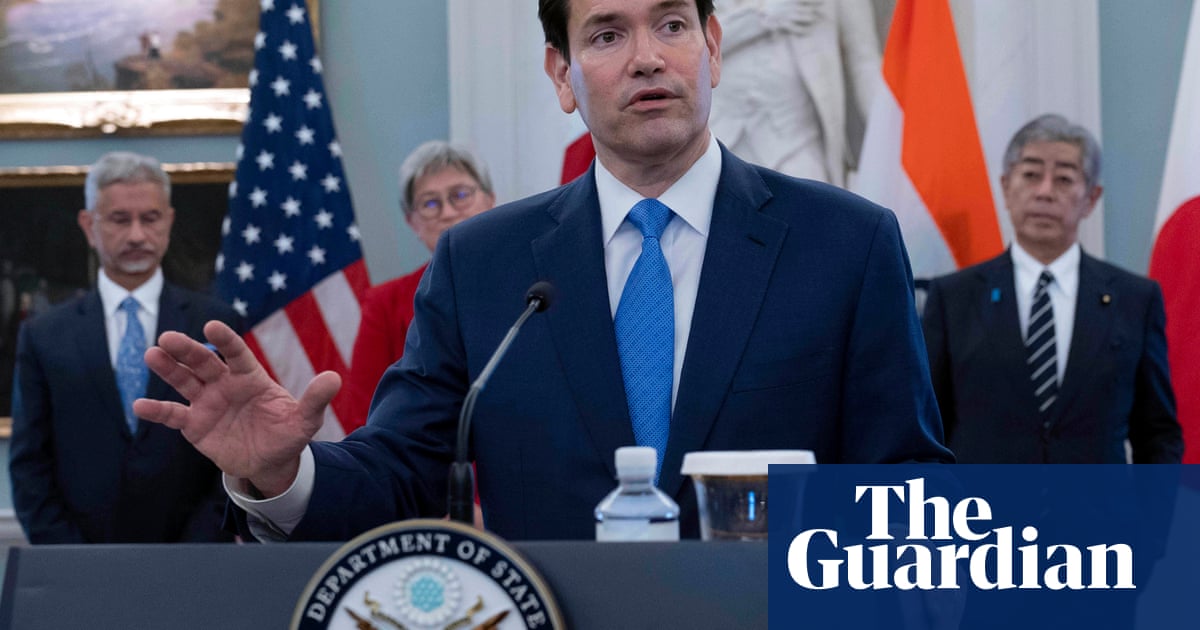
Marco Rubio, U.S. Secretary of State, hosted his counterparts from the “Quad”
group in Washington, signaling a shift towards Asia after concentrating on conflicts in Ukraine and the Middle East, along with domestic priorities. Rubio stated he is “personally been very focused”
on diversifying supply chains and wants “real progress.”
In their joint statement, the Quad countries said, “Reliance on any one country for processing and refining critical minerals and derivative goods production exposes our industries to economic coercion, price manipulation and supply chain disruptions.”
China’s Mineral Dominance
China possesses significant reserves of vital minerals, including graphite, crucial for electric vehicles. According to a 2023 report by the International Energy Agency, China controls over 85% of the world’s processing capacity for rare earth elements, highlighting the urgent need for diversified supply chains IEA, 2023.
Geopolitical Implications
Both the Indian and Japanese foreign ministers emphasized the Quad’s focus on a “free and open Indo-Pacific,”
a veiled reference to countering Chinese influence in Asia. Subrahmanyam Jaishankar, the Indian foreign minister, stated, “It is essential that nations of the Indo-Pacific have the freedom of choice, so essential to make right decisions on development and security.”
At Jaishankar’s urging, the Quad also condemned a May attack in Kashmir that killed mostly Hindu civilians, demanding that “the perpetrators, organisers and financiers of this reprehensible act to be brought to justice without any delay.”
Additionally, the Quad criticized North Korea’s missile launches and insisted on its “complete denuclearisation,”
a key concern for Japan.
Divergent Views
Despite unity on China, the Quad members hold differing views on other global issues. The joint statement omitted Ukraine and Iran, reflecting India’s longstanding relationship with Russia and the historical ties between India, Japan, and Iran.
Trump is slated to visit India later this year for a Quad summit.
