
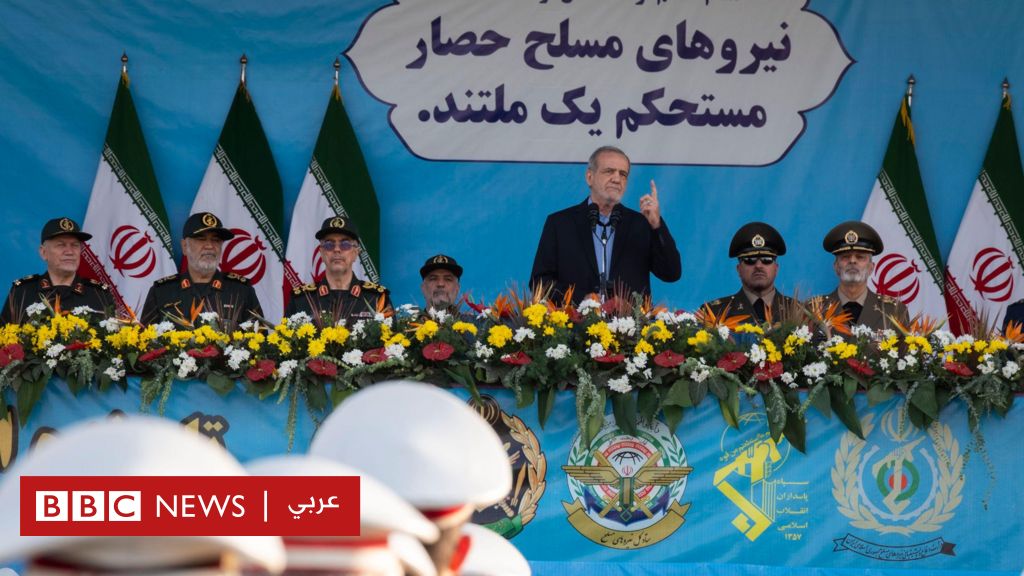
As tensions escalate, Iran is sending a clear message to its neighbors. This article delves into Iran’s warnings to neighboring countries against supporting potential U.S. attacks, offering a critical analysis of the current diplomatic and military climate. Discover the latest developments and potential implications of the ongoing disputes between Iran and the United States.
iran Warns Neighbors Against Aiding Potential US Attacks Amid Rising Tensions
Tehran has issued stark warnings to several neighboring nations, cautioning against any support for possible U.S. military actions against Iran. This comes as Iran intensifies diplomatic efforts to ease regional concerns and bolster relationships, coinciding with increased U.S. military activity in teh Middle East.
Diplomatic Maneuvering and Regional Outreach
Amidst escalating tensions, Iranian President Masoud Bouchakian has been actively engaging with leaders from neighboring countries, including Kuwait, the United Arab Emirates, Bahrain, Jordan, and Iraq.These communications aim to foster dialog and address concerns about regional stability.
- Kuwait: iranian media reports indicate that the Emir of Kuwait assured the Iranian president that kuwait
will not accept under any circumstance that its lands are used in any hostile action against another country,
emphasizing Kuwait’s commitment to dialogue and non-alignment.
Direct Warnings Issued
Iran has explicitly warned Iraq, Kuwait, the U.A.E., Qatar, Turkey, and Bahrain against allowing their territory or airspace to be used for any American attack on Iran.
According to a senior Iranian official,such actions would be considered hostile and could expose these countries to severe consequences.
While most of the targeted countries have not issued public responses, the Turkish Foreign Ministry stated that it was not aware of the warning, noting that such messages could be conveyed through other channels, according to Reuters.
Nuclear Negotiations Stalled
A senior Iranian official stated on Sunday that Tehran rejects direct negotiations with the United States regarding its nuclear programme. However, Iran remains open to resuming indirect talks through the mediation of Oman.
The official told Reuters that the indirect dialogue can test the seriousness of Washington in reaching a political solution,despite the obstacles that may hinder this road.
Timeline of Escalating Tensions
As January 2025, following Donald Trump’s second inauguration, relations between the United States and Iran have deteriorated, marked by mutual threats and military deployments.
- January 2025:
- January 20: Donald Trump assumes the presidency of the United states for a second term.
- Late January: President Trump threatens military action against Iran if it does not agree to a new nuclear agreement.
- February 2025:
- Mid-February: Iran reportedly rejects direct negotiations with the U.S. but expresses willingness to continue indirect talks via Omani mediation.
- March 2025:
- March 30: President Trump threatens to bomb Iran and impose additional sanctions if a new nuclear agreement is not reached.
- March 31: Ayatollah Ali Khamenei responds that Iran would inflict
a heavy blow
against the United States if attacked. - Late March: The united States reportedly transfers B-2 bombers to Diego Garcia in the Indian Ocean.
- April 2025:
- April 1: The U.S. Department of Defense announces increased military presence in the Middle East due to escalating tensions with Iran.
- April 2: Iranian deputy Foreign Minister Majeed Takht Rwanji and Russian counterpart Sergey Ryabkov discuss the Iranian nuclear program, with Russia rejecting any military action against Iran.
- April 6: Iran warns neighboring countries against allowing American attacks from their territories,considering it a hostile act warranting a strong response.
U.S. Military Posture
The U.S. maintains a notable military presence in the region, utilizing various bases for logistical support, air operations, and strategic positioning. Key locations include:
- Al-Dhafra Air Force Base (U.A.E.): Headquarters of the 380th Air Expeditionary Wing, providing logistical services and aircraft refueling.
- Multiple locations in Oman: Used for air transport, surveillance, and military storage operations.
- Prince Sultan Air Force Base (Saudi Arabia): American forces have returned since 2019, housing Patriot batteries and bombs.
Iranian Military Alert
Amidst these developments, Supreme Leader Ali Khamenei has declared the status of the Iranian armed forces at a state of high alert.
