
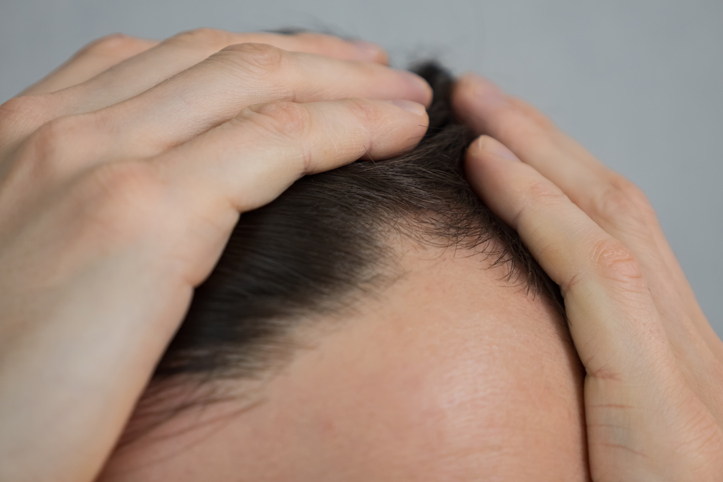
Breakthrough Discovery: Protein MCL-1 Could Revolutionize hair Loss Treatment
Published [Date]
The Quest for a Cure: Understanding Hair Loss
Hair loss, or alopecia, affects millions of Americans, impacting self-esteem and quality of life. While genetics and environmental factors play significant roles, the underlying mechanisms are complex and not fully understood. From androgenetic alopecia (male and female pattern baldness) to alopecia areata, an autoimmune condition, the search for effective treatments continues.
Currently, available treatments like minoxidil and finasteride offer some relief, but they don’t work for everyone, and can come with side effects. Hair transplants are another option, but they are expensive and invasive. This is why the discovery of a key protein involved in hair follicle regeneration is generating so much excitement.
The Role of Hair follicle Stem Cells (HFSCs)
According to a recent international study, the key to hair regrowth lies within the hair follicles, specifically in the hair follicle stem cells (HFSCs). these specialized cells are responsible for regenerating hair, and their activity follows a cyclical pattern: growth (anagen), regression (catagen), and rest (telogen). When this cycle is disrupted, it can lead to hair loss.
Researchers from across the globe, including those in Singapore, China, and South Korea, have identified a powerful “protective protein” called MCL-1 that is essential for HFSCs to function correctly. Without MCL-1, these stem cells become stressed and die, leading to hair loss.
“MCL-1 safeguards activated hair follicle stem cells to enable adult hair regeneration,”
Nature Communications
MCL-1: A Protective Shield for Hair Follicles
the study highlights the critical role of MCL-1 in preventing apoptosis, or “cellular suicide,” in hair follicle stem cells. When hair is pulled or follicles are damaged, stress can trigger apoptosis, leading to hair thinning and loss. this process is regulated by a family of proteins known as BCL-2,and MCL-1 is a key member of this family,promoting cell survival.
Researchers found that MCL-1 is crucial for maintaining the health and function of HFSCs. In experiments involving skin cells and hair follicles,they observed that MCL-1 deficiency led to hair loss. Specifically, when MCL-1 was removed from adult stem cells, the “activated hair follicle stem cells” were quickly destroyed, and hair regeneration in those areas ceased entirely.
This discovery is significant as it pinpoints a specific protein that can be targeted to prevent hair follicle stem cell death and promote hair regrowth.
Consider this table summarizing the hair growth cycle and the impact of MCL-1:
| Phase | Description | MCL-1’s Role |
|---|---|---|
| Anagen (Growth) | Active hair growth | Supports stem cell activity for robust hair production |
| Catagen (Regression) | Hair growth slows, follicle shrinks | Helps maintain stem cell viability during transition |
| Telogen (rest) | Hair growth ceases, hair sheds | Ensures stem cells survive to initiate new growth cycle |
| MCL-1 deficiency | Stem cells die, hair loss occurs | Leads to premature stem cell death and prevents regeneration |
The Interplay of MCL-1 and P53
Interestingly, the study also uncovered a connection between MCL-1 and another protein called P53, which is involved in regulating cell death. While “inactive hair follicle stem cells” could survive even without MCL-1,those that were activated to grow new hair became vulnerable to stress and triggered P53-mediated apoptosis.
However, the researchers found that inhibiting P53 could restore hair growth even in the absence of MCL-1. This suggests that MCL-1 and P53 work together to maintain the delicate balance between cell survival and death in hair follicles.
This discovery opens up new avenues for developing hair loss treatments that target either MCL-1 or P53, or perhaps even both.
ERBB Signaling Pathway: A Key Regulator
Further experiments revealed that the ERBB signaling pathway, which controls cell processes, plays a crucial role in regulating MCL-1 production.The researchers found that ERBB signaling helps maintain “active hair follicle stem cells” by ensuring sufficient levels of MCL-1.
This finding suggests that therapies that enhance ERBB signaling could perhaps boost MCL-1 levels and promote hair regrowth.
Implications for Future Hair Loss Treatments
This research provides a deeper understanding of the molecular mechanisms underlying hair loss and identifies potential targets for new therapies.By focusing on protecting and stimulating hair follicle stem cells, scientists may be able to develop more effective treatments for a variety of hair loss conditions.
While it’s still early days, the discovery of MCL-1’s role in hair follicle regeneration offers hope for a future where hair loss is no longer an inevitable part of aging or a debilitating condition.
the next steps will involve developing drugs that can effectively and safely increase MCL-1 levels in hair follicles, or that can modulate the activity of P53 or the ERBB signaling pathway. Clinical trials will be needed to test the safety and efficacy of these new treatments in humans.
Hair Loss Revolution? unpacking the MCL-1 Protein Discovery with Dr. Anya Sharma
Published March 30, 2025
Introduction: A New Hope for Hair Regrowth
Millions grapple with the emotional adn physical toll of hair loss. Today, we delve into a groundbreaking discovery that could change everything. Dr. Anya sharma, a leading researcher in the field of hair follicle biology, joins us to discuss the role of the MCL-1 protein and its potential to revolutionize hair loss treatments. Dr. Sharma, welcome!
Dr. Sharma: Thank you for having me. I’m excited to discuss this promising research.
Understanding Hair Loss: The Current Landscape
Editor: Dr. Sharma, before we dive into the specifics of MCL-1, can you paint a picture of the current landscape of hair loss and the challenges faced by those seeking solutions?
Dr.Sharma: Absolutely. Hair loss, or alopecia, is incredibly common. Beyond genetics, factors like stress, environmental elements, and aging contribute to hair thinning and balding. Currently, treatments range from medications like minoxidil and finasteride to hair transplants. thes have varying degrees of effectiveness, and regrettably, come with thier own set of limitations and potential side effects. Hair transplants, while effective for some, are expensive and not always suitable for everyone. This is why pinpointing the root biological causes and mechanisms of hair loss such as the newly studied MCL-1 protein is so crucial.
The Science Behind Hair Follicle Stem Cells and MCL-1
Editor: That leads us perfectly to the core of this new discovery. Can you explain the role of hair follicle stem cells (HFSCs) and how MCL-1 is essential for their function?
Dr. Sharma: Certainly. Hair growth is a cyclical process driven by HFSCs. These specialized cells reside within the hair follicle and follow the growth, regression, and rest phases we commonly know as anagen, catagen, and telogen, respectively. The international study highlighted that MCL-1 acts as a crucial protective protein for these stem cells. This protein is essential for preventing apoptosis, or programmed cell death, in HFSCs. Essentially,without enough MCL-1,these stem cells become stressed and die prematurely,which leads to hair loss. Our research underscores how critical MCL-1 safeguards the activation of hair follicle stem cells, allowing for adult hair regeneration.
editor: So, MCL-1 is essentially a shield preventing the self-destruction of these vital stem cells?
Dr. Sharma: Precisely! That is the basic concept. MCL-1 maintains the health and viability of the HFSCs throughout the hair growth cycle.
MCL-1,P53,and ERBB: Unraveling the Complexities
Editor: The research also mentions the interplay between MCL-1 and other proteins like P53. How do these proteins interact to influence hair growth?
Dr.Sharma: The relationship between MCL-1 and P53 is engaging. While inactive hair follicle stem cells can survive without MCL-1, those that are activated or growing, become vulnerable to stress. Stress-related damage can trigger the P53 pathway, leading to apoptosis or cell death. The findings show inhibiting P53 could restore hair growth, even in the absence of MCL-1. This suggests they function in tandem to find the balance between cell survival and cell death within hair follicles. Also, our team’s experiments reveal that the ERBB signaling pathway, which controls various cell processes, regulates the production of MCL-1.
Editor: It sounds like a complicated network.
Dr. Sharma: Absolutely. But the potential is huge. ERBB signaling is a vital pathway that helps maintain the levels of MCL-1 needed by “active hair follicle stem cells.”
Future Treatments: Targeting MCL-1 and Beyond
Editor: What are the potential implications of this research for future hair loss treatments?
Dr.Sharma: This discovery opens up a promising avenue for improved hair loss therapies. The identification of a specific protein that can be targeted to prevent stem cell death and promote hair regrowth is meaningful. Future treatments might aim to:
- Increase MCL-1 levels in hair follicles directly.
- Modulate P53 activity to prevent stem cell death.
- Enhance ERBB signaling to boost MCL-1 production.
Clinical trials will be crucial to evaluate the safety and success of these novel approaches.
Key Takeaways and Actionable Insights
Editor: What would you say are the key takeaways from this research, Dr. Sharma, and what should readers keep in mind?
Dr. Sharma:
- The discovery of MCL-1’s critical role in hair follicle stem cell survival offers a new understanding of the molecular mechanisms underlying hair loss.
- Targeting MCL-1,P53,or the ERBB signaling pathway presents new possibilities for treatment.
- While exciting, it’s critically important to understand that these are current research findings. Clinical trials are essential before any new treatments become available.
For those experiencing hair loss, I recommend:
- Consult a dermatologist to get an accurate diagnosis and tailored advice.
- Stay informed about the latest developments in hair loss research.
- Manage stress and maintain a healthy lifestyle, as these can all contribute to overall hair health.
Conclusion: Looking Ahead
Editor: Dr. Sharma,thank you for sharing your expertise and insights. This research is incredibly promising.
Dr. Sharma: Thank you for having me. We are very hopeful about this discovery.
Editor: The quest for a cure for hair loss has taken a giant leap forward. While it’s still early stages, the understanding of MCL-1 and related pathways provides a real chance for new, effective treatments. What are your thoughts on this exciting discovery? Share your comments below!
