
3D-Printed ‘Mini Spinal Cords’ Show Promise in Restoring Function After Injury
Table of Contents
Researchers at the University of Minnesota have achieved a breakthrough in spinal cord injury recovery, combining 3D printing, stem cell biology, adn lab-grown tissues to create a potential pathway to reversing paralysis.
For the first time, a research team at the University of Minnesota Twin Cities has demonstrated a groundbreaking process that combines 3D printing, stem cell biology, and lab-grown tissues for spinal cord injury recovery. The study, recently published in Advanced Healthcare Materials, offers a beacon of hope for the over 300,000 people in the United States living with the debilitating effects of spinal cord injuries.
Currently, there is no cure for spinal cord injuries, and complete reversal of damage and paralysis remains elusive. A primary obstacle lies in the death of nerve cells and the inability of nerve fibers to regenerate across the injury site.This new research directly addresses this challenge.
Building a Bridge for Regeneration
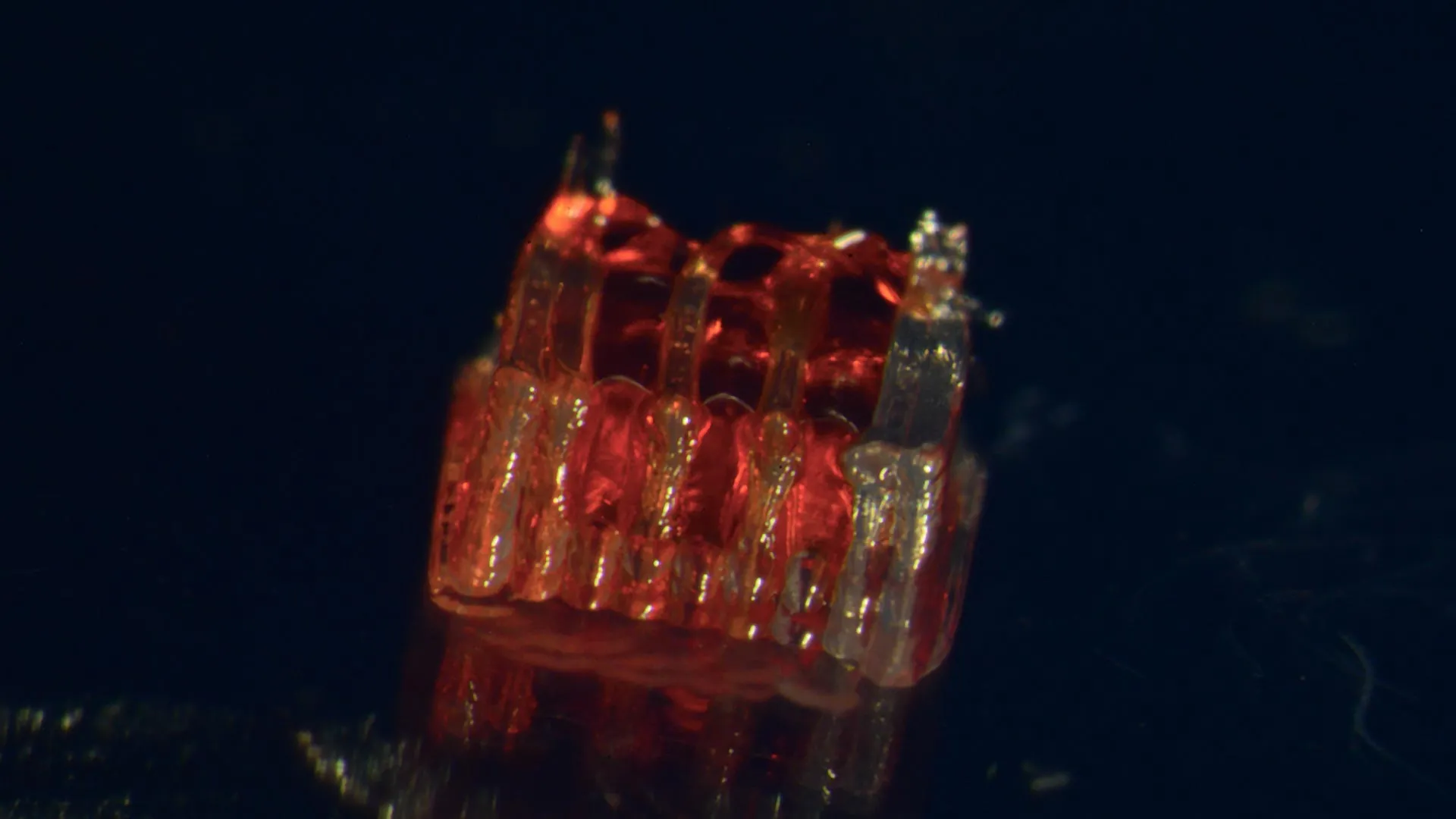
The team’s innovative method centers around creating a unique 3D-printed framework, termed an organoid scaffold, embedded with microscopic channels. Thes channels serve as conduits for regionally specific spinal neural progenitor cells (sNPCs) - cells derived from human adult stem cells possessing the remarkable ability to divide and differentiate into specialized mature cells.
We use the 3D printed channels of the scaffold to direct the growth of the stem cells, which ensures the new nerve fibers grow in the desired way,”explained Guebum Han, a former University of Minnesota mechanical engineering postdoctoral researcher and first author of the paper, now at Intel Corporation.This method creates a relay system that, when placed in the spinal cord, bypasses the damaged area.
In a preclinical study,researchers transplanted these scaffolds into rats with completely severed spinal cords. the results were compelling: the sNPCs successfully differentiated into neurons and extended their nerve fibers in both directions – rostrally (toward the head) and caudally (toward the tail) – forging new connections with the host’s existing nerve circuits.
Over time, these newly formed nerve cells seamlessly integrated into the host spinal cord tissue, resulting in significant functional recovery in the rats. This suggests the potential for restoring lost motor function and sensation.
A New Era in Regenerative Medicine
“Regenerative medicine has brought about a new era in spinal cord injury research,” stated Ann Parr,professor of neurosurgery at the University of Minnesota. “Our laboratory is excited to explore the future potential of our ‘mini spinal cords’ for clinical translation.”
While the research is still in its early stages, it represents a significant step forward, offering a novel avenue of hope for individuals affected by spinal cord injuries. The team is now focused on scaling up production and further refining this combination of technologies for future clinical applications.
The research team included Hyunjun Kim and Michael McAlpine from the University of Minnesota Department of Mechanical engineering; Nicolas S. lavoie, Nandadevi Patil and Olivia G. korenfeld from the University of Minnesota Department of Neurosurgery; Manuel Esguerra from the University of minnesota Department of Neuroscience; and Daeha Joung from the Department of physics at Virginia Commonwealth University.
This work was supported by funding from the National Institutes of Health, the State of Minnesota Spinal Cord Injury and Traumatic Brain Injury Research Grant Program.
