
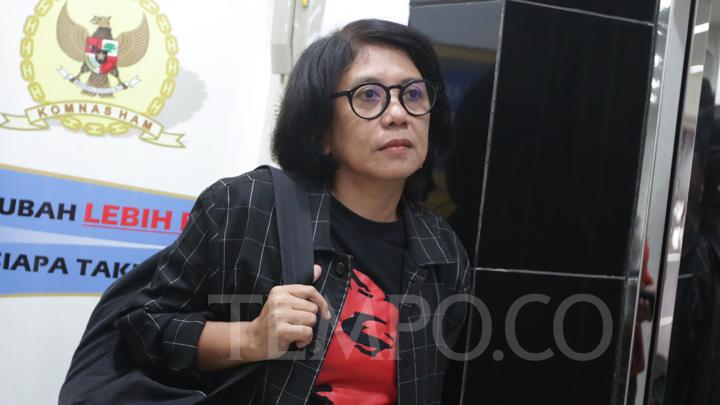
Indonesia Marks 31 Years of Human Rights Commission
After decades of debate and evolving legal frameworks, Indonesia’s National Commission on Human Rights (Komnas HAM) celebrates its 31st anniversary, continuing its vital role in safeguarding civil liberties.
Early Debates Shaped Commission’s Foundation
The concept of human rights was a point of contention during the formative years of Indonesian independence. Discussions within the Investigating Committee for Preparatory Work for Indonesian Independence (BPUPKI) revealed differing viewpoints on the inclusion of human rights in the 1945 Constitution. **Sukarno** and **Soepomo** expressed concerns that emphasizing individual rights would clash with Indonesia’s collectivist principles of mutual cooperation and kinship.
Conversely, **Mohammad Hatta** and **Moh. Yamin** advocated for the explicit inclusion of human rights to prevent the nation from becoming authoritarian. This resulted in a compromise, embedding fundamental rights within the Constitution—specifically, Articles 27, 28, 29, and 31, addressing equality, assembly, religion, and education.
Formal Establishment and Expanding Authority
Nearly half a century later, Presidential Decree Number 50 of 1993 officially established Komnas HAM on June 7, 1993, marking a significant step toward institutionalizing human rights protection. This decree was further reinforced by Law Number 39 of 1999, solidifying the commission’s legal standing.
The creation of Komnas HAM stemmed from recommendations made during a 1991 Human Rights Workshop co-hosted by the Indonesian Ministry of Foreign Affairs and the United Nations. The commission operates using both national laws and international human rights standards.
Komnas HAM’s Core Functions
Komnas HAM is designed to foster an environment conducive to human rights, aligned with Pancasila, the 1945 Constitution, and the UN Charter. Its primary goals include protecting and promoting the full development of Indonesian citizens and their participation in all aspects of life.
According to Article 75 of the Human Rights Law, Komnas HAM is empowered to assess, research, disseminate information, monitor, and mediate human rights issues. It also investigates serious violations, forming ad hoc teams with community representatives as needed.
Furthermore, Law Number 40 of 2008 grants Komnas HAM the authority to oversee government policies at all levels, identifying and addressing racial and ethnic discrimination. The commission’s procedures are detailed in National Commission on Human Rights Regulation Number 2 of 2019.
Key Responsibilities: Research, Education, and Mediation
Komnas HAM conducts research on international human rights instruments, offering recommendations for accession or ratification. It also studies existing laws, proposing amendments or new legislation to strengthen human rights protections. Education is a crucial component, with the commission disseminating knowledge through formal and informal channels.
The commission’s monitoring function includes observing human rights implementation, investigating suspected violations, summoning witnesses, conducting site inspections, and providing opinions on ongoing cases. Komnas HAM also facilitates reconciliation, settles disputes through mediation, and submits recommendations to the government and parliament.
Globally, human rights defenders face increasing threats. According to Front Line Defenders, at least 305 human rights defenders were killed between 2015 and 2023 while working to protect fundamental freedoms. https://www.frontlinedefenders.org/en/news/2024/03/14/2023-deadly-year-human-rights-defenders
Komnas HAM’s continued work remains essential in upholding the rights and freedoms of all Indonesian citizens, ensuring a more just and equitable society.
