
Antarctic Salinity Surge Accelerates Ice Melt
Unexpected ocean changes defy climate models, threatening global stability.
Contrary to projections, Antarctic surface waters are becoming saltier, intensifying ice melt. This startling discovery challenges existing climate models and sparks concerns about planetary equilibrium, demanding urgent investigation.
A Vicious Cycle of Salt and Heat
Since 2015, coinciding with a record shrinkage in Antarctic sea ice equivalent to the size of Greenland, ocean salinity has spiked. An international team, including researchers from the University of Southampton, uncovered this troubling mechanism using satellite data and on-site measurements.
Normally, oceans feature layered structures: cold, less salty water sits atop warmer, saltier depths. This division prevents deep-sea heat from rising. However, increased surface salinity disrupts this arrangement, causing water to sink and mix layers. Consequently, heat rises, accelerating the melting of ice from below.
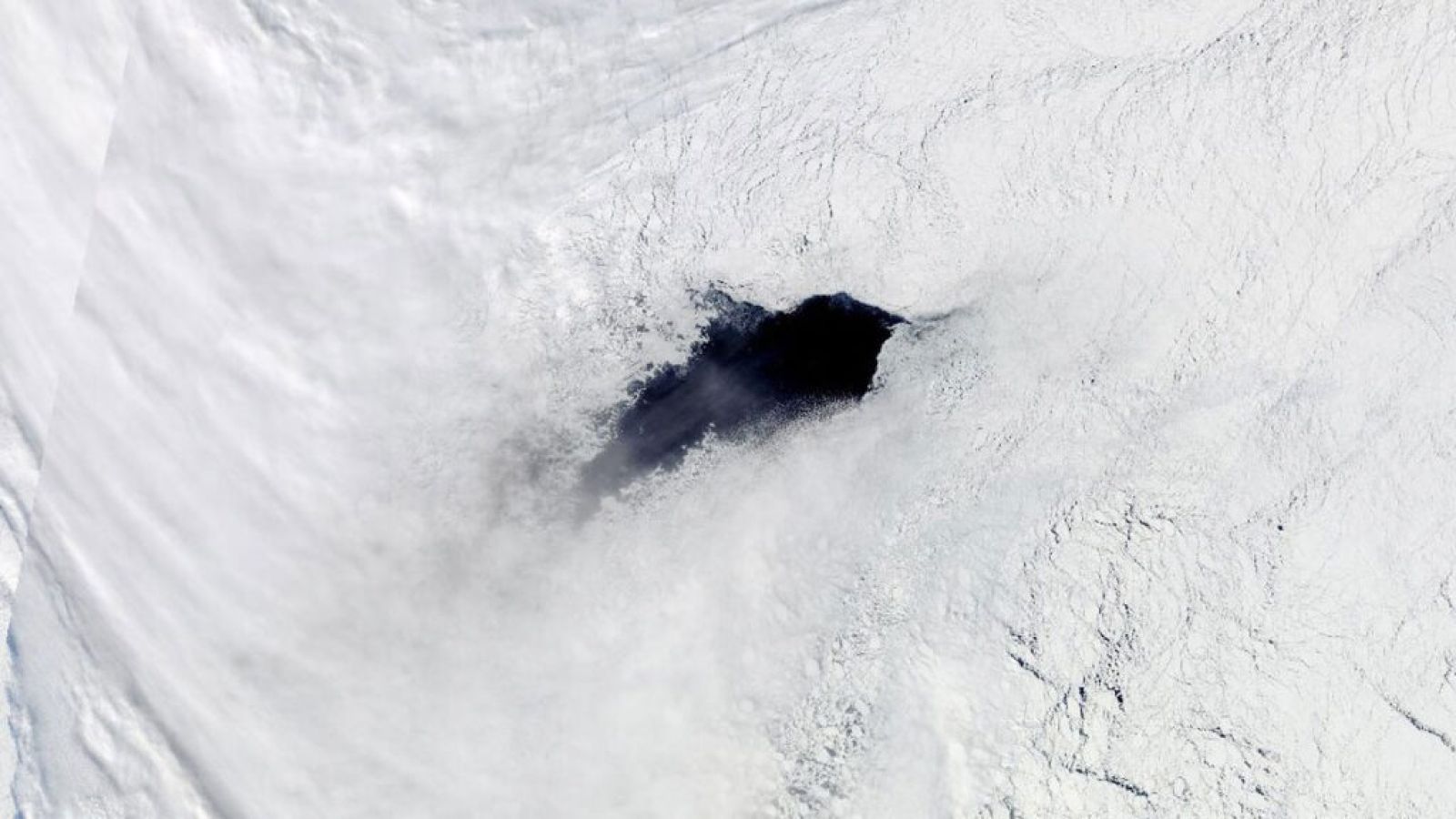
The reappearance of the Maud Rise polynya, a huge hole in the ice, highlights this disturbance. Its return, after being absent since the 1970s, signifies a significant shift in oceanic conditions.
Crédit: In Earth Observatory
Unanticipated Acceleration
While climate models predicted ice decline, the speed is faster than anticipated. Increased salinity creates a feedback loop: less ice exposes more ocean to sunlight, further amplifying warming. Recent data indicates that Antarctic sea ice reached a record low in February 2023, raising alarms among scientists (Science.org).
Global Repercussions
Antarctic sea ice reflects sunlight, playing a vital role in regulating Earth’s temperature. Its ongoing disappearance could alter sea currents and global climate patterns, impacting polar ecosystems and beyond.
The Southern Ocean’s capacity to absorb CO₂ may also diminish, reducing its function as a climate buffer. Ice-dependent species, such as emperor penguins, face direct threats from these changes.
Ongoing monitoring of this region is critical for understanding climate system evolution, though challenging. Satellites and underwater robots provide essential data for anticipating future changes.
